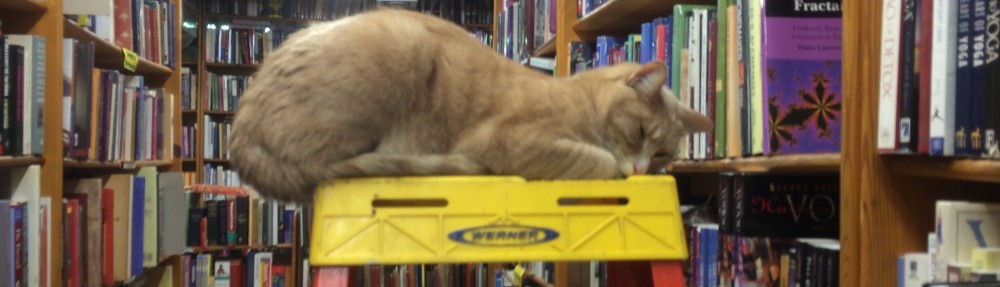
A Video Tour of Hollywood’s Last Big General Book Shop

Eli Goodman’s Cosmopolitan Book Shop Was The Last Big General Book Shop in Hollywood.  Some Final Thoughts and a Short Video Tour Before it Was Closed

Posted by Paul Hunt

\

Click on the box above to see what a really old bookshop looks like.  I did this short film just a few days before the end.  Eli was already under full time care and hadn’t been in the shop for three or four years.

elihead

Eli Goodman

Below are a series of Advertisements that Eli Ran in a local paper.

Eli 1 May 1

Eli 2- May 1

Eli 3- May 1

Eli 4- May 1businesscard-3.5inx2in-h-front

2 of our best customers park their rigs at our front door.

2 of our best customers park their rigs at our front door.


Hollywood Boulevard Bookstore Follies – Part 4

Bookstores on Hollywood Boulevard in 1976 – Continued

by Paul Hunt

Hollywood Book City

Hollywood Book City.  Photo by Wayne Braby

Walking to the next block, we now arrive at what can loosely be called the Cal Worthington of the used book business, HOLLYWOOD BOOK CITY.  This store has the largest stock of used and out-of-print books in Los Angeles, somewhere around a quarter of a million books if you care to count.  The store is co-owned by Alan Siegel and Jerry Weinstein.  And here we must pause and say a few words about Los Angeles’ first family of books, the Weinsteins.  They are to books what the Kennedys are to politics, there seems to be a never-ending supply of them.  As far as I can tell, each and every Weinstein is a bibliophile at birth, having both ink in the veins and a natural instinct for buying and selling books.

The Weinstein dynasty is particularly strong at this location, as Jerry’s sister is married to partner Siegel.

Now where were we?  Oh, yes, BOOK CITY.  The store has a large general stock of just about everything you can think of, including one of the largest sections of books on art and books on the arts, cinema, theater, graphic arts, architecture, television and radio history. The store is well laid out, with different sections clearly marked, and even an upstairs balcony to rummage through.  Book City seems to agree with my theory of constant expansion to avoid overcrowding.  It was not too long ago that a large hole was made through the west wall, adding on what is now mainly a section of new books at discount, and remainders.  Now it seems that the east wall is going to get the same treatment and on or about June 1st the book hunter will find a new doorway leading into the “scarce, rare and antiquarian department.”

Hollywood Book Shop bus cd

Walking on a few doors will bring you to HOLLYWOOD BOOK SHOP.  This store has been here about three years, although one of the owners has been in the book business in Hollywood about 10 years.  They carry a large general stock of used and out-of-print books. The partners, Jack Garvin and Ray Cantor are polar opposites, at times engaging in bitter quarrels.  Garvin, a stocky man who resembles Nikita Khrushchev, started as a book scout, operating out of a garage behind some storefronts on Adams Avenue, east of Western, a once rich area that has seen better days.  He is also into minerals and geology, and this specialty led him to buy equipment to cut geodes and polishing machinery to further enhance specimens that he buys.  Jack is a chain-smoking, gruff man to deal with, Ray the nicer of the two, but they have built up an excellent stock of books.

Recently they purchased a large warehouse stuffed with magazines and pamphlets.  The story behind this is an odd one.  There was a periodicals dealer down in the South Los Angeles area by the name of Nick Kovach, who was dealing in scholarly periodicals back in the 1950s.  When the Russians launched Sputnik, it was a big kick in the rear to the U.S. educational system, which all of a sudden woke up to the sad fact that this great country was falling behind in science and technology.  Kovach found himself to be center stage in the arena of scientific and mathematical periodicals, courted by libraries across the country who needed this material.  He bought and sold enormous quantities of paper goods and magazines, filling up many warehouses.  In later years he realized that the collections included a lot of non-scientific stuff that was of no use to the libraries at the great universities and corporations.  So Kovach started to dispose of tonnage of this stuff, which was mainly popular culture and mainstream magazines.

Along came a roving dealer named Mark Trout, who traveled around the country in a van, looking for this kind of material.  He “leased” the rights to an old, long closed-down bowling alley in South Los Angeles from Kovach  that was jam packed with just the right stuff that he wanted:  popular magazines, like Life, Time, Fortune, and the such.  Trout made a great amount of money over the years selling this at flea markets.  One time, at the Rose Bowl flea market, Trout showed up with a stack of over 50 Number 1 Life magazines in mint condition. The collectors went berserk.  After milking the contents of the bowling alley for a number of years, Trout offered to transfer the “lease” to Jack Garvin and his partner.  All the great popular magazines had been removed and sold by Trout, but the place was still jammed with pamphlets, ephemera and lesser-known periodicals.  Garvin pulled out van loads of great stuff, including a world-class collection of pamphlets and rare broadsides on the subject of American radicalism, which he is selling to libraries at big prices. Garvin and Canter go down to their bowling alley once a week and pack their old van full of paper goodies and rare ephemera.  “It’s like owning a gold mine,” Jack once told me.  “Every once in a while we hit a particularly good vein!”  And it is enough material for years to come.

Cherokee Book Shop

Cherokee Book Shop.  Photo by Wayne Braby

A couple of doors further we arrive at one of the finest book shops in the world.  CHEROKEE BOOK SHOP. Established about 25 years ago, it has a large selection of Americana, occult, fine bindings, first editions, fine illustrated books, military history, and so on without end.  Upstairs is the famous comic room with 200,000 comics.  They also now have about 20,000 old Playboy Magazines.  Browsing through the store I noticed a couple of interesting items in a glass case near the counter.  One was a large folio Bible printed in London in 1683.  I’m not much for buying and collecting old bibles, but this one was quite unusual.  I am not referring to the fact that it is bound in a rich, glistening morocco, or that the morocco is covering heavy oak boards.  It is the fore-edge painting that attracts attention, mainly because it is an “open” painting, clearly visible where the book is lying on the table.

Inside Cherokee Book Shop. Photo by Wayne Braby

Inside Cherokee Book Shop. Photo by Wayne Braby

Another interesting item (among thousands) is a limited edition of “The Life of Our Lord,” by Charles Dickens, published by Merrymount Press in 1934.  This also is in full red morocco..  Laid in the front inside cover is a cancelled check that Dickens made out to “self” for five pounds, not a small sum when you glance at the date August 27, 1864.  One can’t help wondering what that illustrious gentleman spent  the money on:  was it something special or just enough to cover some day-to-day expenses?  Curious as we are, we will never know.  Also to be found inside this volume, placed loose between two pages, is an old invitation to a dinner on November 2, 1867, in honor of Dickens’ “forthcoming” departure on a trip to the U.S.  The banquet took place at Freemason’s Hall, Great Queen Street, London.  Ahh, if we only had a time machine, we could put that invitation to good use.  And don’t forget to take along some items for Mr. Dickens to sign, maybe even the Merrymount edition of “The Life of  Our Lord.”  Now that would be a rarity, having a signed edition of a book that was printed sixty-five years after the author’s death. Since we don’t yet have a time machine, if you see a copy, be advised that it is either a “spirit signature” or a forgery.

Atlantis Books. Photo by Wayne Braby

Atlantis Books. Photo by Wayne Braby

Leaving Cherokee, we go down the  Boulevard a couple of blocks to ATLANTIS BOOKS.  This is one of those secret bookstores, one that you have probably walked past and never seen because it sits well back from the Boulevard, tightly packed into the rear of an alcove.  Even if you have the exact address you may miss it, so I’m going to give you two important landmarks.  The first is Mr. Howland’s miniature jewelry store and watch repair stand, which sits at the front of the alcove.  The second landmark is to watch the names of the stars embedded in the famous sidewalk.  When you see the name “Rochester” (Legs, do yo’ stuff!) you will be there.

The store itself is deceptively large, but not large enough for the seventy thousand volumes nestled into every nook and cranny (no lie, the store actually does have little nooks and crannies.)  Sometimes the new arrivals are piled so high on the counter that the only thing visible of the owner is an occasional puff of smoke from his pipe that drifts over the top of the stacks, lazily floating up toward the ceiling.  You know right away that this is your kind of store.

More often than not, there is a book scout leaning on the front counter, trying to sell some books to owner “Doc” Burroughs.  One can always tell how tough is the haggling over price by the amount of cigarette butts the fearless scout has deposited in the ashtray. Dr. Burroughs always wears a suit and tie, not to be flashy, but he is a Veterinarian who makes house calls only, he does not have a clinic.  In between the stops to treat sick dogs and cats, he stops at thrift stores, estate sales, and other bookstores to pick up some good inventory.  His Volkswagen station wagon is always piled with coolers full of medicine for the animals, surrounded by boxes of books, filling up the rest of the space.  It’s a winning combination because even if book sales are slow, sick animals abound, so the rent will always get paid.

The real fun at Atlantis is to slip towards the back aisles and dig around in, say, the Russian History section, or root through one of L.A.’s best World War 2 collections.  On the way out (or in), don’t forget to check out the three bargain carts that are dutifully wheeled out into the alcove each day.

Marlow's Bookshop. Photo by Wayne Braby

Marlow’s Bookshop. Photo by Wayne Braby

Leaving Atlantis, walk up to Argyle and cross the street to the south side of Hollywood and work your way back.  The first stop is right on the corner of Hollywood and Argyle,  MARLOW’S BOOKSHOP.  Owned by -you guessed it – a gentleman named Marlow, this store has been open about five years. It has a general stock of used books, but specializes in back issue periodicals and in research (mainly for the film industry).  A graduate engineer before he got into the book business, Marlow said he recently got a call from the filmmakers of All The President’s Men.  They needed to duplicate the library of The Washington Post for some of the scenes, so  Marlow rented them an entire set-up of 10,000 books.  It was a rush job , he put it together overnight so the film company could start shooting the scene the next day!

Notice the 50% off sign in the window.  This came about when Marlow had stopped over to Hollywood Book City.  While chatting with Book City owner Alan Siegel, he complained that business was a little slow.  “Why don’t you have a sale?” said Alan, “It’l bring in some new business.”  Marlow said he would try it, but didn’t know how to start.  Alan generously loaned Marlow a beautiful large banner that said “Anniversary Sale, 50% Off”.  Marlow borrowed the banner and put it up on his shop (not shown in the photo).  It worked so well that he kept the banner up there permanently, and refused to give it back to Alan. “That damned banner cost me over a $100,” said Siegel.  “No good deed goes unpunished on this street” he said sadly. To make matters worse, a couple of Marlow’s customers claim that he doubled the price on most items in order not to sell too cheaply.  I can only say that these are at the moment unsubstantiated and unproven claims, but certainly in the realm of bookstore lore.

Universal Book Store. Photo by Wayne Braby

Universal Book Store. Photo by Wayne Braby

A few doors west is UNIVERSAL BOOKS.  This store has been in business for about 10 years.  The present owner is a former insurance agent who got into the book business “because of the easy pace and the interesting people.”  Universal carries a general stock, specializing in first editions, rare and scarce books and occult.

universal-books

“I really like book people,” says the owner Jules Manasseh,, “but once in a while you get a nut in.  Like once a guy came in and went back to the shelves and started looking around.  Before long he starts goose-stepping around the store yelling ‘Sieg Heil’ and giving the Nazi salute.  I had to ask him to leave, he was bothering the customers.  Then, a couple of weeks later he came back in, tried to sneak past me wearing one of those pair of phony glasses with the big nose attached.  I guess he thought I wouldn’t recognize him.  I threw him out again.  He was a real nut.”  Well, that’s Hollywood, folks!

Gilberts Book Shop. Photo by Wayne Braby

Gilberts Book Shop. Photo by Wayne Braby

Next is GILBERT’S BOOK SHOP, the oldest book store in Hollywood.  It has been there since 1928 (although not with the same name), it was formerly The Satyr Book Store and began life actually around the corner on Vine Street.  They carry new and used books, mainly in the fields of metaphysics and astrology, and also push best-seller novels, first editions and fine sets.  You can also buy old movie lobby cards for $1.00 each on a bargain table near the door.  During World War II Henry Miller used to receive his mail here. Mr. Gilbert, the owner, is married to one of the daughters of Edgar Rice Burroughs. Don’t even think about finding any rare Tarzan books, Mr. Gilbert keeps them all at his house.

Proceeding west to Cahuenga and then taking a few steps south to 1952, you will find WORLD BOOK AND NEWS, a 24-hour newsstand.  The large display room also offers magazines and pocketbooks, with a generous selection of the latest comics stretching along the outside wall of the building.

A block away at 1638 N. Wilcox is BOND STREET BOOKS.  Owners Steve Edrington and Jim McDonald maintain a large stock of used and back issue comics, back issue magazines, and a good selection of movie stills and posters.  They’ve been in business here eight years and their crowded store contains lots of goodies.

Hollywood Book Service invoice. Collection of Paul Hunt

Hollywood Book Service invoice. Collection of Paul Hunt

HOLLYWOOD BOOK SERVICE  is also just south of the Boulevard, at 1654 Cherokee Ave.  The owner, Helen Hall, is the only woman bookstore owner in the Hollywood Boulevard area.  She started as a book scout but found that she had accumulated so many books that she had to open a store, which was in 1965.  With over 20,000 books, Ms Hall specializes in searching for out of print books, movie stills, posters, and magazines, used encyclopedias and sets of The Great Books of the Western World. There is a good stock of autographed movie stills, including George Raft, Cagney, Errol Flynn, Bette Davis, and Edward G. Robinson.

Ms. Hall fondly recalled one of the most pleasant moments in her career as a bookseller.  She had once bought some books from a private school library, and as she was leaving the librarian gave her, free of charge, about 30 bound volumes of Railroad magazine  She took them back and set them on the floor of her shop, near the door, and the next day a customer walked in and purchased them for $250.  Now, if you could only have a windfall like that every day!

Larry Edmunds Book Store. Photo by Wayne Braby

Larry Edmunds Book Store. Photo by Wayne Braby

Back on the Boulevard again, we go into LARRY EDMUNDS BOOKSHOP.  This has the world’s largest collection of books and memorabilia on cinema.  Larry Edmunds died about 1941.  He had originally worked for the Stanley Rose Bookstore, but left Rose and went into partnership with Milt Luboviski, the present owner.

larry-edmunds-2

For you bookstore history buffs, Stanley Rose’s shop was across the street from present day Edmunds, in what is now a part of Musso & Frank’s Grill.  At the time, the 1930s, Rose was known as one of the most flamboyant of the Los Angeles booksellers.  He was a friend of the famous: Cagney, Faulkner, Thomas Wolfe were among his friends.  Rose was known to carry his satchel of fine books around town to personally show them (and sell them) to his high rolling customers, the movie producers, directors and stars.  He was also known to spend a lot of time at Musso’s, where he held court daily, as the expression goes.  Rose died after the war.

Larry Edmunds Book Store. Photo by Wayne Braby

Larry Edmunds Book Store. Photo by Wayne Braby

But back to Edmunds.  The shop has over one million items, including antique cameras and movie paraphernalia.  It is here that you will find the literature of the cinema:  books, biographies, sheet music, scripts, magazines, posters, press books, lobby cards, and so on.  A nice place to spend the summer!

Our last two stops are both on a side street, Las Palmas, a few steps south of Hollywood Boulevard.  The first is UNIVERSAL NEWS, another 24 hour newsstand.  They stock everything fro current magazines to out of town newspapers.  If they ain’t got it you’re in trouble!  A lot of Hollywood industry people stop here to pick up the latest copy of Hollywood Reporter, or the Racing Form.

Baroque Book Store. Photo by Wayne Braby

Baroque Book Store. Photo by Wayne Braby

Lastly, we come to BAROQUE BOOK STORE, which almost adjoins Universal News.  Owner Sholom “Red” Stodolsky specializes in modern literature, literary criticism, music theater, film, poetry and first editions.  You can get an added thrill to that exciting out-of-print tome you find by reading it while strapped into the electric chair that sits in the middle of the store.  Don’t worry about the volts, it’s only a make-believe mock-up from a movie set. (Who said that book dealers are eccentric?)

Now that you have the list, the only thing left to tell you is “Happy Hunting”, and I hope you are fortunate enough to have a bank account much larger than mine!


Hollywood Boulevard Bookstore Follies Part 3

Continuing the Survey of Hollywood Bookshops in 1976

by Paul Hunt

Photos by Wayne Braby unless otherwise noted.

A note about the photos.  About the time I originally wrote this article, my friend Wayne Braby offered me his glorious photos of the Hollywood Bookshops you will see in this article, never before published to my knowledge.  Wayne was in contact with Muir Dawson of Dawson’s Book Shop, and I have a letter from Muir discussing the possibility of Wayne writing a book for Dawson on the subject of the Hollywood book stores.  I don’t think this project was ever completed, hence Wayne gave me his photos. Wayne Braby was a bookseller, specializing in Military History.  When I knew him, he was working out of his house in Santa Monica.  His wife was a librarian in Santa Monica, a very literary family! I hope you greatly enjoy these wonderful photographs showing a long-lost world.

Getting back to the subject at hand, all the shops on Hollywood Boulevard have the same problem to a greater or lesser degree, so I would like to propose a solution to this over-crowding phenomenon.  It can only be met by an aggressive policy of continuous expansion, i.e., get more books then get more space then get more books and so on.  The bookshops will slowly expand until they are adjoining one another, and the future will bring the glorious scene of Hollywood Boulevard becoming one giant bookstore, all connected with interior passageways.  You could enter at, say La Brea, and not surface again until a week later at Argyle.  Pack a snack.

(Note how wrong I was on that prediction.  Wishful thinking to the max.  There’s now only one bookstore left on Hollywood Blvd., Larry Edmunds, specializing in motion picture history.  All others gone, a near complete wipe-out of our past cultural repositories.)

But for now you will have to be content to hoof it up and down the street, seeking out the bookshops individually.  To help you with this chore, I will take you on a short guided tour, possibly introducing you to some shops that have until now escaped your attention.  We will start on the north side of Hollywood Boulevard from Highland and go east until we reach Argyle, then return on the south side of the street.  You will probably need several days to accomplish this when you do it for real; it is not a feat that can be performed in one day and also be enjoyed, unless of course, your will power is like unto Superman and you are the only person on earth who can walk into even the smallest bookshop and resist the urge to browse thoroughly through the beckoning stacks.  The mere mention of Superman brings us to our first stop, COLLECTOR’S BOOK STORE, aka BENNETT’S, home of the rare comic book.

The bronzed plaque embedded into the front of the entrance-way carries an odd slogan in Latin that reads, “bene Agimus Vobiscum.”  I am told that this means, “Where the good deals are given.”  Collector’s originally started in business on Wilcox, just north of the Boulevard, about 1965.  The owners are former high school teacher Malcolm Willits, Leonard Brown, and Mark Willoughby. They moved to their present location in 1968, where they now hold forth as one of the great rare comics dealers.  The well organized store also holds an awesome amount of movie memorabilia, including movie stills, posters, scripts and fan magazines.  The more that one million movie photo stills are all categorized for easy reference both by star name and movie title.  The 50,000 or so movie and television scripts are also well categorized  The poster collection even includes one of the very first movie posters, circa 1912, from an obscure movie that was filmed by Edison.

If you happen to be into science fiction,, check out the tremendous collection of back issue science fiction magazines  Since this year is the 59th anniversary for Amazing Stories, you may want to pop in and pick up the first issue, dated April 1926.  Bring a bank loan officer with you.

The old Pickwick Bookshop

The old Pickwick Bookshop

Next we come to PICKWICK BOOK SHOP a store so well known that I can add very little.  It is now owned by B. Dalton, a giant national chain of bookstores.  It is certainly the supermarket of books, for here one can find an enormous selection of new paperbacks, hard cover editions, best sellers and remainders.

But the store was not always like this.  The behemoth of a book store began in a very small way in 1925 when Louis Epstein purchased a tiny bookshop that was actually attached to a gunsmith’s shop in Long Beach.  The man who sold it to Epstein gave him some parting advice on buying used books:  “Don’t ever pay more than 10 cents for any book.”  Epstein used to recall that advice got him thrown out of some of the best homes in Long Beach.

He eventually moved to downtown Los Angeles, calling his store Epstein’s Used Books. His shop was near the old Dawson’s, and Epstein could watch the constant stream of folks going into Dawson’s, with little spill-over into his small shop. Epstein dealt in literature and poetry, but was having a hard time of it, all the while seeing his neighbor Ernest Dawson doing a pretty good business with a lot of the L.A. trade passing through his doors.  Then fortune smiled on Louie.  A movie studio came in and wanted to rent 5,000 books.  When pressed for a rental amount, he blurted out 5 cents a day per book.  The studio folks were happy with that, and Epstein wrote up a rental document, which was to last for 30 days.  Time passed, and the books were never returned. Epstein called a few times but was given the run-around.  About a year later a truck pulled up in front of his shop and dropped off the 5,000 books that had been used by the studio as set props. The studio sent him a check for the rental for 30 days.  After some phone calls, protesting that they owed him $250. per day for 365 days, the studios said “no way, we only needed them for 30 days.  Sorry that we forgot to send them back on time, go pound sand.”  Epstein phoned his lawyer instead.  The attorney extracted the full amount from the Studio, a very substantial figure. Their lax business practice cost them nearly $100,000, big money in the 1930s.  When Epstein called his attorney to collect the money, his lawyer refused to give it to him.  “If I give you this money, you’ll just spend it foolishly buying more books and having a good time.  So here’s the deal:  you go find a building to buy and I will release the money into escrow, that way at least you will own your own store.”  And that is how Louis Epstein ended up owning the building on Hollywood Blvd. that became the mighty Pickwick Bookshop, opened in 1938 and concentrating on selling new books and remainders.  Mr. Epstein sold his interest to B. Dalton a few years ago.

pickwick-inside

A great shot of the inside of Pickwick.  The stairs on the right led up to the top floor which was loaded with stacks of remainders, many from the U.K.

Jim Hubler's Partridge Book Shop

Jim Hubler’s Partridge Bookstore.

Nestled right next door to Pickwick is our next stop,PARTRIDGE BOOKSTORE.  For fifteen years Partridge has treated folks quite nicely and become a minor landmark.  A passerby will often notice that around the hour of 3 p.m. a small, growing knot of book buyers begins to line up in front of the store.  The anxious looks on the faces of the patrons reveals some silent prayers (or curses) to the almighty that Jim Hubler, the owner, will be a little earlier today than he was the last time.  Why do all those people wait here rather than go to the obvious elsewhere?  Simple.   Everything in Partridge is discounted, including all the paperbacks.  A large selection of new books, with lots and lots of science fiction paperbacks makes it a pleasant, and thrifty, place to shop.

Dorsett's shop is in the back of the Artisan's Patio

Dorsett’s shop is in the back of the Artisan’s Patio

 Next is FRED DORSETT, BOOKSELLER.  This store is located off the Boulevard inside the Artisan’s Patio, an alley-like mini-craft center containing, among other things, a leather shop, jewelry store, and candle shop.  Dorsett has been there about four years, specializing in used and out-of print books about books, printing history, small press books, metaphysical and occult.

In the olden days about a hundred years ago, bookmen were often publishers and printers as well as booksellers.  Dorsett is helping to carry on this tradition.  An author himself, his great interest in poetry has led to the audacious project of publishing a book of poetry entitled “Gold Coast.”  Working in his spare time with friend Rob Budinger, the book is being produced entirely by hand, using hand-made paper and printed on an ancient Imperial Press that is lodged in one of Rob’s spare rooms.  As was demonstrated to me one evening, the printing is very time consuming, taking anywhere from five minutes to an hour per each individual page, depending on just whose side the gods happen to be on that day.  The book will then be bound entirely by hand and sold in a strictly limited edition.  This type of production is a slow process; the book will take about a year to produce.

Meanwhile, Dorsett has plenty of adventures to occupy his time, including roaring through the scores of estate sales on the week-ends, hitting the hundreds of library sales, and rooting through the books that are brought into the shop by book scouts.  Sometimes, just getting to work is an adventure.  One recent Sunday, Dorsett arrived at the Artisan’s Patio early to get some books priced for sale.  As he put his key into the outside gate a slight movement on the other side of the gate caught his attention.  He stared through the iron bars of the gate in disbelief: a large, fully grown lion was sitting in the shadows looking straight at him!  “I slowly turned the key back to lock the gate and backed away, unnerved and shaking.  I wasn’t prepared to go in there and be lunch for Mr. Lion.”  The owner of the big cat showed up a few minutes later, apologizing. “He probably wouldn’t hurt you, he’s usually pretty mellow” he said, dragging his pet down Hollywood Blvd. to his car.  “Yeah, right” said Dorsett.  “Tell it to the Ringling Brothers”.

book-treasury

Moving on a few doors, we come to THE BOOK TREASURY.  The store has been operated by the present owners about two years.  Jon Gentilman and Bob Weinstein.  A warm, pleasant shop it is richly paneled and neatly organized, the books evenly lining the shelves like the Queen’s guards waiting for marching orders.  The specialties here are science fiction (hardbacks only), modern first editions, Americana and illustrated books.

Certainly the most interesting piece of Americana in the shop at the moment is a handwritten letter from George Wythe, one of the signers of the Declaration of Independence.  Dated November 24th, 1763, it is addressed in a clear and beautiful hand to one Henry Tucker of Norfolk, Virginia.  Wythe was seeking to have Tucker post a bond guaranteeing the costs that would occur in a suit brought by an alleged friend of Tucker’s.  Wythe remarks at the end of the letter that if Tucker does not know the man involved, “you will be kind enough to pardon this freedom and let me know who is his friend”  History, as far as I know, does not record Tucker’s answer, but it does record quiet starkly that Wythe himself could have used more friends.  Someone he trusted poisoned him, and he received the dubious distinction of being the only signer of the Declaration of Independence to be murdered!

To be continued….

Map with notes of shop locations referred to in the article.

Map with notes of shop locations referred to in the article.

The Wild Ride of a Hollywood Bookdealer

Arnold Herr’s Screamingly Funny New Book Chronicles His Years Working at Cosmopolitan Bookshop in Hollywood

by Paul Hunt

arnoldfront1viii16-430x665

Arnold worked for years at the old Cosmopolitan Book Shop in Hollywood, owned by one of the oddest, most eccentric individuals in the history of the galaxy, Mr. Eli Goodman. I also worked at Cosmo, but only part time the last two years of its existence, until its demise a couple years ago.  But Arnold was there for around 20 years when Eli was personally running the biblio madhouse, and luckily for us, he kept his head down and his notebook handy. He originally wrote about the goings on at Cosmo  using a pseudonym for Eli.  His articles were published in the ABAA newsletter, later on BookstoreMemories.com, Stephen Gertz’s Booktryst.com and finally gathered together with new chapters, Arnold’s own illustrations, and a whole lot more funny stuff.

Arnold and I have both owned our own shops.  I knew Eli for many years before I worked there. I heard a lot of the stories first-hand as they were happening, and saw some flashing moments pass by at the speed of light.  Eli, although a complete eccentric, was also a brilliant man.  He had a great memory, was as well read as any university professor of literature, and was a kind man, although he didn’t suffer fools. Well, once in a while just to break the monotony.  He had the longest run of any of the individual Los Angeles bookstore owners, in great part because he had an inner toughness due to his growing up under difficult circumstances and living in the shadow of the Great Depression. You can glean some more about Eli, with some photos elsewhere on this website.

Eli Wallowing in Books. Photo by Paul Hunt

Eli Wallowing in Books. Just as I snapped this, Eli, almost dozing, jerked alive, blurring the photo, due to a customer pointing out a pile of cash laying on the counter. Photo by Paul Hunt

If you’ve ever wondered what really goes on behind the scenes in a creaky, dusty bookshop crammed to the rafters with books, and run by Los Angeles’ number one champion tightwad, catering to an assortment of university professors, literary high steppers, book collectors, and the sweepings of Hollywood crackpots, then here it is.  Arnold’s story is bold, screamingly hilarious.  His pen pops with laughter.  If you don’t get the hoot of your life reading this, then please check into the morgue immediately, ’cause you’re part of the walking dead.

You can order this book from the publisher, Poltroon Press (click here to order)

Hollywood Boulevard Bookstore Follies Part 2

Hollywood Boulevard Bookshops in 1976, With a Brief History of Bookshops in early Los Angeles, back to 1862

by Paul Hunt

 This is from an unpublished article that I wrote around 1976.  I had submitted it for publication to a newspaper called The Los Angeles Sun, but I don’t remember that it ever got into print before the Sun disappeared into eternal tabloid darkness.  This is how it was on Hollywood Boulevard in those glorious days of old when bookstores lined the street from Highland to Vine and beyond, with a few notations from my notes and memory that I have added to the original manuscript.  The weird thing about this is that I had it in notebook binders (my only copy), along with a slew of photos, and it was lost when I had to close my own shop.  The notebooks were in a storage unit full of books, which I lost due to my dire financial situation. Years went by, and then a dear friend from Sacramento, Keith Burns, stumbled onto the notebooks at a flea market in Alameda. The odds of that happening are astronomical, and I gratefully accept it from a kind Universe.  It’s like finding your Hopalong Cassidy wallet that you lost when you were seven.  Anyway,  he purchased them and recently dropped them off to me, hence I am able to share this story and the photos. The bad news, as fate would have it, is that I am in the middle of a forced move from my small apartment, due to the building being sold.  I am putting everything in storage once again, and may have to finish this while a vagabond from a Starbucks somewhere.  I will type tonight until my Internet is shut down, and continue it later from a coffee house.

The old Pickwick Bookshop

The old Pickwick Bookshop. Photo by Wayne Braby

Hollywood may not be the movie capital of the world anymore, but it is rapidly becoming one of the finest book cities to be found anywhere.  It wasn’t always so, of course.  Early historical records show that our modern prowess in the book biz started somewhat feebly in a small location at 95 Main Street in downtown Los Angeles about 1862.  The honor of being the first bookseller in L.A. goes to one Samuel Hellman, who, according to the first city directory, also sold stationery, cigars, hardware, paints and glass.  “New music and books,” boasted an advertisement in the directory, “are received in by every steamer,” and no doubt shipped from San Pedro by the stage coach or mule freight!

We wouldn’t know much of anything about the early Los Angeles booksellers if the late Ernest Dawson, founder of Dawson’s Book Shop, hadn’t written a short article about the subject for the 1947 issue of the Southern California Historical Society magazine, The Quarterly.  It seems to be one of those subjects that people just take for granted, the bookstores come and go, change hands, take in partners, but hardly anyone bothers to record these doings, with the result that we are left with a very sparse history.

To book lovers and collectors, this situation definitely has its bad points.  For instance, Mr. Dawson described very briefly, a couple of the early second hand bookshops, like Jones Bookstore at 226 West First Street.  You can’t help drooling when you read that “one of the entrances was given over to cheap books, 2 1/2 cents, 5 cents, 10 cents, and 25 cent shelves and sections which always made for attractive browsing.”  When was the last time you bought a good used tome for 2 1/2 cents?

And then there was The Eclectic Book Store Second and Main, which was operated by James Wallen Smith.  According to Dawson, in 1892 you could trudge into his shop and find thousands of paper covered novels as well as scarce and valuable books.  Imagine the goodies to be found in the basement and the attic where Smith kept the pickings of his used books.  Access to both basement and attic was by a creaky ladder, which makes it all the more enticing to a fanatic bookhound, who would journey to the planet Pluto if he thought there was some good stuff there!

Dawson's Larchmont store. Note homeless man getting ready to bed down for the night.

Dawson’s Larchmont store. Note homeless man getting ready to bed down for the night.

But all the old out-of-print book shops at the turn of the century era are long gone from downtown L.A. Their stock in some cases has been absorbed by other stores, and in other instances the stores have simply moved or gone out of business  Dawson’s founded in 1905 at 713 S. Broadway, is still run by the son of the founder, but has been located on Larchmount in Hollywood for some time.  As the downtown area slowly became blighted, the book trade moved west, following the business and the customers  The center is now, and has been for some years, located on Hollywood Boulevard.  That is not to say that there are not other bookstores of equal interest in other parts of the city; Hollywood Boulevard simply has the bulk of the stores, so in numbers, at least, it rules the book roost.  My recent survey turned up eighteen book and magazine shops located on and near the Boulevard, quite impressive for a strip of land only about a mile long.

These stores appeal to virtually every interest, from the bizarre occult to the everyday cookbook; from the no-longer-so-cheap paperback to the rare tome worth untold thousands.  But no matter what the variety or the appeal, they all have a few things in common.  For instance, most of the bookstores are over-crowded to the point of resembling a fleet of World War II Japanese prison ships.  This isn’t necessarily bad, as the true bibliophile loves to wallow through musty stacks.

I believe this is Phil Mason

I believe this is Phil Mason

Perhaps the worst example of this is Yesterday’s Books, which isn’t even on Hollywood Boulevard, but since I’m digressing on the subject of overcrowding, it is impossible to overlook.  Yesterday’s Books is located at 451 N Western in a ramshackle old building that was probably condemned in 1910  Inside, you can find one of Hollywood’s most beloved bookmen, Phil Mason, sitting on a stool, smoking a cigarette, a half-finished bottle of Bourbon sitting next to him on a table, along with a loaded .38 revolver, philosophizing about the evils of government, and quoting such tid-bits as “You can do without diamonds, they’re only for looks, but a civilized man can’t do without books.”  But it is not the poetry or the philosophy that stuns you, it is the sixty thousand or so books all vying with one another in unashamed rivalry to violate Einstein’s theories of time and space.

Mason later changed the name of the store to "Old Khayyam Books."

Mason later changed the name of the store to “Old Khayyam Books.”

Phil Mason, a man in his 60’s, was a noted Communist back in the 1930’s.  At some point, probably around the time of the Hitler-Stalin pact, he left the Party.  He is bitter about his years as a communist, and said that when he quit all of his former comrads were ordered not to speak to him, and he found himself isolated and alone.  Books were his savior, and he could find solace in them, leading him into the book trade.  Eccentric to the core, he at one point was furious with Pacific Bell telephone company, and ripped out the telephone and flung it out onto Western Avenue, where a passing truck crushed it into a plastic mess.  He never had a phone again.

His price for books, $1 each, is cheap enough.  He buys large quantities for a dime each, and when he discovers a gem it goes up the street a few doors north into a little office in the same building that he rents to store his better books for high rollers and dealers.  Flash a wad if you want to get his attention as a serious buyer.

At present, you can, with a little effort, force yourself down the aisles, squeezing between the shelves to find that “sleeper” worth twenty times the dollar that Mason is going to charge you..  It was about the middle of last year that the over-crowding situation had seriously deteriorated.  Over a period of several months cardboard cartons, heavy laden, had slowly piled up in the aisles.  On top of the cartons were piled more and more books, until entire sections of the store became a literal sea of knowledge, and I may add, it was one ocean where the human vessel could sail only with the utmost caution and difficulty, the specter of imminent shipwreck especially dangerous around the reefs of the history section.  Finally, one day I entered the shop to find passage totally blocked by a solid four foot wall of books.  Mason was perched on his stool, as usual, engaged in an animated, humor-filled conversation with a customer.  He was oblivious to the situation, or had given up hope, so with a passing wave I stormed the book piles like a French Grenadier attacking a street barricade during the Paris Commune.

Now, some people may think that was a horrible situation.  Not at all.  It was wonderful.  I tunneled, rooted and scrounged for hours, catching a short glimpse of the floor only once.  When I finally stumbled back out to the counter four and a half hours later, I felt smug knowing that the little pile of books and ephemera I clutched tightly in my blackened hands were worth far more that Mason was going to charge me.  It wasn’t until I got home that I realized the difference in price would be made up in laundry bills.  I smelled like walking book-must.

That was an extreme example of overcrowding.  I was in Mason’s recently and almost everything in the aisles had been sold or put away somewhere, and one can walk through the store in relative safety.  Maybe the Fire Marshall had been in the previous week and thrown a wild tantrum.  Maybe the decorators came in and scooped up a few million books for some movie set.  I was going to ask Phil, but he was grouchy and I noticed the Bourbon was almost gone from his bottle, so I decided to mind my own business and just look for some goodies now that they were more visible.  All in all, crowded or no, it is one of my favorite places, and I strongly recommend it.


(To be continued…)


Memorial for Jerry Lang

Long Time Manager of Cliff’s Books in Pasadena

Jerry Lang

Jerry Lang

A touching memorial for Jerry Lang was held in the beautiful town of Sierra Madre, California on August 14th, 2016.  Jerry passed back in February, as reported on this blog. Jerry’s family and friends had the opportunity to get together and celebrate the life of this kind and gentle man.  His sister Cathy Seal, his beautiful daughter Brittany, and his brother Tim, all gave heart felt remembrances of Jerry.  A slide show presented photos of Jerry throughout his lifetime.

His nephew Don Lang, who is a musician in Portland, Oregon, wrote and performed a powerful song about Jerry, called Welcome to Heaven.  Don said that since Jerry loved books, he thinks of him every time he sees a paperback.  “Paperbacks are going away, just as our dear Jerry has gone away.”  We managed to video his song, which you can hear by clicking on the box below.

Here is the direct link to the song, on youtube:  https://youtu.be/q6SAkZN54s0

Check out the interview with Jerry that I posted on this website, just before his terrible stroke.  The closing of Cliff’s Books was a disaster for the employees.  It happened without notice and had severe consequences for many of us.  Having worked with Jerry at the store, on and off for a period of years, I can say that he was a first class human, a kind and caring man.  He also had a great sense of humor, and we had our share of laughs.  Jerry was there at the store through thick and thin, he was the only employee who stuck it out during the time the store was closed down by the City of Pasadena, hanging in during the day so that Jack and I could work at night correcting the building violations in order to get the shop open again. I don’t know how he did it, there was no pay for any of us as the doors were shut. Really, I don’t know how any of us did it, it was like being in the lost brigade of WWI.  Jerry was a rock for us, and if he hadn’t been there during the day for those 3 months we would not have been able to do our work. I will have more to say about the closing, and more video to post later.

The Memorial was held here in Sierra Madre

The Memorial was held here in Sierra Madre

The Gardens

The Gardens

Memorial Service

Memorial Service

IMG_4568

IMG_4566

IMG_4558

IMG_4563

IMG_4565

Brittany and Jerry

Iliad Bookshop Rebuilds Crunched Giant Books

Front of Shop Restored From Attack by Vehicle

IMG_4054

 Look back on our archives to January 22, 2015 to see the incident of a car that was hit in in the intersection of Chandler and Cahuenga and sent crashing into Iliad Bookshop’s display of Giant Books outside the front of the shop.  The car was the loser of the crash, with damage to the front end, but the books took a beating and were torn down and replaced with a whole new row of colorful tomes.

In addition, owner Dan Weinstein added two fabulous murals along the building’s facing sides on both Cahuenga and Chandler. We all remember the great mural on his old location on Lankersheim.  Sadly, only a small portion of that is left, the rest were painted out by incoming businesses.  Below are some photos of the new books and portions of the murals  The fantastic murals on both locations were done by artist Paul Dilworth.  Click here to visit his website. Dilworth is a London artist who paints portraits of houses and London Life.  His latest murals on the Iliad show the fantasy and whimsy of literary characters, so next time you visit Iliad Bookshop take your camera with you.

More scenes of Giant Books and Dilworth’s murals:

IMG_4060

IMG_4044

IMG_4057

IMG_4041

IMG_4056

IMG_4064

And finally, L.A.’s own Bukowski, having a perpetual smoke outside the Iliad. He seems to be saying “boy, a nice cold beer would be good right now.”

photos by Paul Hunt

Tibetan Bookseller’s Story

Tsering Thondup Saved Rosicrucian Leader Raymond Bernard

Tsering Thondup

Tsering Thondup

Back in August, 2014 I was visiting Vajra Bookshop in Inglewood, California with my friend Julie Webster.  The main bookie was a Tibetan named Tsering.  On a previous visit he had shown me a letter from Dr. Raymond Bernard, thanking him for saving his life in In India.  I asked him to tell the story to Julie, and tried to film it with my malfunctioning iphone, but you can get the basics of it by clicking below on the video box.  Tsering, as well as being a bookseller, was an accomplished silversmith, and kept the shop going by working on jewelry repairs, as the book sales in Inglewood were not very good. He passed in the fall of 2015, so this is the only record of an incredible event, as young Tsering, then living in  Dharamala, the Tibetan community in India, literally carried Dr. Bernard on his back for 3 miles to a hospital, and then stayed there for a week to cook for him.  I’m wondering how many Americans would do the same here if they found a sick Tibetan on the street.  Just wondering……

The Beautiful old Vajra Bookshop in Inglewood

The Beautiful old Vajra Bookshop in Inglewood

Dr. Raymond Bernard, the French head of the Rosicrucian Movement

Dr. Raymond Bernard, the French head of the Rosicrucian Movement. Tsering carried Dr. Bernard on his back for 3 miles to a Hospital in India when he had collapsed from hepatitis.

Photo of Dr. Bernard from http://www.plotinus.com/raymond_website_copy.htm

Click on the box below to view the video.


Photos (except that of Dr. Bernard) by Paul Hunt and Julie Webster.

Uncle Paulie says:  Learn a lesson from this, don’t drink the water in India.  Or Flint, MI.

Eli Goodman Laid To Rest

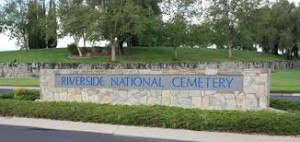
Goodman Interred at Riverside National Cemetary

download

Goodman was interred on April 21, 2016 at the Riverside National Cemetery.  He qualified for resting there by his service in World War 2.  I found a few more photos of Eli, which I am posting here.


Eli Goodman, 2009

Eli Goodman, 2009, photo by Paul Hunt


Eli Goodman with Price Guide to the Occult. Photo by Arnold Herr

Author Eli Goodman with Price Guide to the Occult.  Photo by Paul Hunt

Eli Wallowing in Books. Photo by Paul Hunt

Eli Wallowing in Books. Photo by Paul Hunt   A customer was pointing to some cash left on the counter, jerking Eli from his slumber and into immediate action, and in the process blurring the shot.

Eli getting ready to close for the day. Around 2009. Photo by Paul Hunt

Eli getting ready to close for the day, around 2009. Photo by Paul Hunt

Breaking news:  Arnold Herr’s hilarious fictional account of his many years of adventure at Cosmopolitan, uh, I mean “Megalopolis Books”, is being readied for publication.  Stay tuned for further news, especially if you are interested in obtaining a limited edition.

Hollywood Boulevard Bookseller Follies – Part 1

(updated with more information 11-17-2016)

Tales of Wild and Crazy Bookseller Behavior From the 1970s,

Some of it Actually True

by Paul Hunt

*****

Mark Sailor Lands a Job at Hollywood Book City

Mark Sailor landed at Hollywood Book City sometime in the mid 1970s.  At that time, Book City was in its growing years, expanding from one store to three storefronts on Hollywood Blvd.  The Store was started by Jerry Weinstein, of the famous Weinstein booksellers.  I knew them all except one of the sisters, and I can tell you they were bibliophiles through and through.  There’s been a few family book dynasties in Southern California, The Dawsons and the Duttons come to mind, but the Weinsteins outnumber any other contenders in all fields, they opened book shops around Southern California, often competing with one another, sometimes squabbling with each other, sometimes partnering up, but usually a fiercely independent group, helping each other only in the direst of circumstances.

Hollywood Book City

Hollywood Book City

When Jerry started Hollywood Book City, he was already a veteran bookseller.  As I remember, he was first involved with Universal Books, which was down east of Vine Street.  Jerry was somewhat desperate to find a suitable partner for the Book City store, someone who could lend a hand but also pump in some desperately needed capital. The desperation was so bad that he even asked me, which was really a joke, I was driving a cab and barely had enough to eat much less that strange word “capital”.   At the time, his sister lived in New York and was married to a man named Alan Siegel, who did have some money.  Jerry convinced them to come out West.  It was a good partnership for a while, but Jerry’s wife did not get along with Jerry’s sister, and that led to a breakup, with Alan running the Hollywood Store and Jerry heading out to the San Fernando Valley, where he started Valley Book City.  More on this Weinstein saga later (maybe), for now we are at the juncture of Mark Sailor drifting into Hollywood Book City and getting a job working with Jerry.

Hollywood was thriving in those days.  Book shops lined the street, and all retail was booming.  Most folks think that working in a book shop is a great life:  you could just sit around reading books all day, making an occasional sale.  How wrong, wrong, wrong you would be if you believe that nonsense, especially if you were talking about the weirdest place on earth, the center of the spinning vortex of strange behavior:  Hollywood.  Let us never forget that Hollywood and the surrounding area was founded by some wonderful but far out religious cults and communes and their occult and secret marks are still on the land.  I have written about this before, and intend to expand on it in the future.

Whatever Mark Sailor knew about bookselling, he probably got a shock working at Book City. The street was full of weird people, who would often come into your shop and drive you nuts.  I worked at several bookshops in Hollywood, and there was never a dull moment.  Nutcakes were especially more obnoxious at night, stealing books, tearing out pages, pissing in a back isle, eating gooey food they had sneaked in, on and on.  Some were so smelly you had to eject them right away or they would run off your other customers. And then there were the robbers, often with guns and/or knives, intent on getting a handful of cash from your register to buy enough drugs to make it through the night. All the above remarks apply only to the other booksellers on the street.   The patrons were even worse.

How Mark Sailor Met Famous Actor Will Sampson

Will Sampson

Will Sampson

Mark Sailor was in the middle of this inferno, starting out as a clerk, putting brodarts on books, cleaning up, trying to remain positive.  He was tall and thin, with thick glasses, an infectious smile and so good natured that I thought he wasn’t 100% human- I never saw him in a bad mood.  One night Will Sampson, the Native American actor who was just starting his acting career, came into Book City. Mark said he was drunk. He was a big guy, 6’5” and a tough former rodeo rider. He was in a rage about the white man and all the things they did to the American Indians. (We all agree with him on that issue). For some reason he grabbed Mark, taking him completely by surprise and got him in a headlock. He then marched him up and down Hollywood Boulevard, all the while ranting and screaming about the evil white man.  Mark thought he was going to die.  Sampson was so strong that Mark, thin and wispy, couldn’t break loose, and the big Indian dragged him around the Boulevard like he was a rag doll.  After a while, he calmed down, let Mark go, and staggered off.   As far as we know, even after Will sobered up, they did not become fast friends. So much for the pleasant evenings working in a bookstore in Hollywood.  After that, Mark became wary of anyone entering the store and getting too close to him.  This story came via Cliff, who got it from Mark before he died.

Mark's Book Shop on North Lake near Washington, Pasadena

Mark’s Book Shop on North Lake near Washington, Pasadena

Mark went on to work at other bookshops, like Cliff’s in Pasadena.  Mark became a first-rate bookseller.  He opened his own stores at various times.  I think his first one was on North Lake Street. Alan Siegel, owner of Hollywood Book City very generously paid for the first months rent, last months rent and security deposit to help Mark get a start. It was a nice shop, but about a year or two after opening the landlord decided to have the building re-roofed, and as soon as the old roof was taken off, an unexpected rain storm came, ruining Mark’s entire stock of books.  The jerk roofer left town, never to be called into account, and Mark had a bad time getting any recompense from the landlord. As the saying goes, “life ain’t for sissy’s”

When Mark first got the shop opened, Alan sent Ivan Chertoff up to help Mark put plastic Brodarts on the dust jackets of his books.  This was a job that Ivan had at Hollywood Books City, where he had hung out for years, not really an “official employee”, but helped Alan around the shop for lunch money.  I met “Ivan” many times at Book City, and frankly always felt that he had more than a few screws loose.  His real name, by the way, was Aaron Sotland according to Cliff.  I have no idea why he donned the moniker of “Ivan”, but other customers at Book City called him the crazy Russian.  When the moon was full, look out, he could fly off the handle.  Mark worked at Book City during this time, and certainly knew Ivan, so some kind of deal was made for Ivan to lend a hand to Mark in his new shop.  Alan probably needed a breather, another good reason aside from the obvious charitable one, to “loan” his ace Brodarter to Mark.

“Ivan” died a few years ago of cancer.  Mark went to the hospital to see him, but Ivan refused to talk to him, angrily and loudly proclaiming that Mark owed him money, possibly from the days of disaster at the Book Company.  Ivan died the next day.  My only thought is that if you are on death’s door why worry about a few bucks that someone owes you?  You aren’t going to take it to wherever you might be headed.  Somewhere I have a photo of Ivan getting an award from the City of L.A. or some Library Group, I’ll post it when I find it.

Another interesting thing that Cliff told me recently is that when he was younger he dated Mark’s mother Marilyn.  Small world, eh?
IMG_3904

IMG_3896Later, he had another shop called The Owl Bookshop.  I was never there, but found an old business card that I’m reproducing here.  Mark helped out Cliff with bookselling and bookkeeping until his death a few years back.  He was a sweet guy, always polite and seemed to keep his cool, even under some of the difficult circumstances in his life.

I will update this post in the future, with some photos of Mark, as soon as I find them.  I also need to check with Cliff to get more information on his death.  I know he went into the Huntington Hospital in Pasadena, he wasn’t feeling well.  He was put into an induced coma, which he never came out of.