Hollywood Boulevard Bookseller Follies

Whatever Happened to “Frugalius Maximus”?

by Paul Hunt

Pickwick now a souvenier shop

Pickwick now a souvenir shop

Jim Hubler is quite a character.  He owned Partridge Book Store in Hollywood for years. This was right next door east of the big Pickwick Book Shop, which was probably world famous at that time, 1970’s through the early 1980s.  Jim had a simple strategy for success: his shop was next door to Pickwick, and he existed by a parasitic relationship, he being the parasite.  As I remember, Jim worked in the store as a young man, and when the owner passed, his widow sold the store to Jim, who made payments on it until he owned it. Jim told me that Mr. Partridge, a graduate of UCLA, made a lot of money in the parking lot business in San Francisco, before he got into the book business.

The shop was unusual in many ways.  First were the hours of operation.  No 9 to 5 here, he adjusted his hours to take full advantage of his colossal neighbor, and would usually show up around 4pm, to the cheers of a waiting group of book scouts and customers.  The trick was that he stayed open really late, usually until past midnight, often until 1am.  When Pickwick closed at 10pm a big mob of customers flooded right into Jim’s place.  It was amazing to see this, but that makes perfect sense, since many book lovers are night owls, and where else, even in old Hollywood, could you go to a bookstore that was open that late.  Partridge became a meeting place for all kinds of characters and Jim raked in the cash, making most of his money from 10pm to 1am, when all the other book dealers were sleeping.

A Strange Way to Organize a Bookshop

Another weird thing about Partridge was the way the books were organized, something that I have never seen anywhere else. Jim organized the books by Publisher!  Although he did have used books and a lot of remainders, most of his stock was new.  By organizing by Publisher it was really easy for Jim to check on stock for reorder.  This was long before computers, and Partridge was a one-man act, and he had quite an array of fascinating old shelves and racks.  I still remember the Modern Library rack, packed with all those wonderful little books that are now considered worthy of collecting.  Jim had a great knowledge base in his head and anyone asking for a book would be pointed to the correct publisher’s shelf.  I was reading a lot of science fiction back then, and the Ballentine paperback rack was one of my favorites.  Balllentine also published a great series on World War 2, with a lot of “original” first editions that are still collected today, some 50 years later. It was also the time that Ballentine was publishing the now legendary “Unicorn” fantasy series. The Publishers, by the  way, loved this system, it was an immense ego boost for them to have their own rack in the middle of Hollywood, sort of a showcase for them.

Jim stocked a lot of remainders in order to cater to the Pickwick crowd.  As anyone who ever went into that great store would remember that the ground floor was new books, the small mezzanine  had something or other that I can’t remember, but the top floor was packed with remainders, many from England.  It was overwhelming and so tempting to just spend  your entire paycheck on them.  Jim realized what a big draw Pickwick’s top floor was, so he created a mini-remainder area in his shop.

Another funny thing about Jim, but not so funny for the frustrated publishers, was how he turned book club editions into cash.  He would buy massive quantities of clean Book-of-the-month club editions from book scouts.  As long as they were clean, with nice dust jackets, Jim would pay 50 cents or $1.00 for them.  At first I was puzzled about this, but I was just starting out as a book scout, and I was trained not to pick up book club editions because collectors wanted the first editions.  Sometimes it was hard to tell, because used bookstore owners would “clip” the corner of the dust jacket so it looked like it once had a price on it, so you spent a lot of time flipping over the back of the dust jacket to look for the little dot on the back of the binding which would indicate a Book of the Month edition.

Introducing “R.E.Turner”

Jim’s nick-name was “R.E. Turner”.  He got this because when he sent back returns to the publishers he would include mounds of Book of the Month editions.  I was in the shop once when one of the angry publisher’s reps was trying to lecture Jim that this was not acceptable to the publisher, and they weren’t going to give him credit for the book clubs. Jim told him that they had better give him credit or else.  The rep didn’t want to lose this good account and was pleading with Jim that in some cases he was actually returning more copies than he originally ordered.  “Stop crying about it to me,” Jim said, “you guys make tons of money, just send them out as remainders to someone else.”  Mr. R.E. Turner had spoken.

The Saga of Louis Epstein

Jim had a long run at Partridge, until fate smiled at him, and boy, did he smile back.  Here’s what happened to the best of my recollection:  Old man Louis Epstein was the owner of the mighty Pickwick Book Shop, the central fixture in the galaxy of book stores that were in Hollywood at that time.  Epstein had started out in downtown Los Angeles in the really old days of the 1930’s, in a little shop near the original Dawson;s Book Shop, around Wilshire and Figuroa.  He bought the shop from another old bookseller, who gave him a piece of advice:  “Never pay more than 10 cents for any used book and you will make a profit.”  That wasn’t much money in the 1930s, but things have gotten worse now, with amazon.com selling books for a penny. Who would have known?  But the formula worked for years, both for Louie and his brother, who worked at another used book shop called Bennett and Marshall.  As a side note, when Louie’s brother was in his 80s, he was still scouting for rare books.  He was a tall, stately man, and I remember seeing him at estate sales in the 1980s.  He would charge into the sale waving his stout wooden cane around and bellowing at the top of his voice “Clear the way, Bennett and Marshall coming through for the books.”  Bennett and Marshall, once eminent rare book dealers, had pretty much faded by the 1980s, and were under new ownership for a while, and then disappeared entirely from their retail store in West Hollywood.  But hey, the bellowing and the wooden cane searing through the air were enough to clear the way for Louie’s brother and scare off the competition. By that time, nobody knew who the hell Bennett and Marshall were, but it was a good idea not to rile the tall old man, whoever he was.

Epstein dealt in literature and poetry, but was having a hard time of it, all the while seeing his neighbor Ernest Dawson doing a pretty good business with a lot of the L.A. trade passing through his doors.  Then fortune smiled on Louie.  A movie studio came in and wanted to rent 5,000 books.  When pressed for a rental amount, he blurted out 5 cents a day per book.  The studio folks were happy with that, and Epstein wrote up a rental document, which was to last for 30 days.  Time passed, and the books never returned. Epstein called a few times but was given the run-around.  About a year later a truck pulled up in front of his shop and dropped off the 5,000 books that had been used by the studio as set props. The studio sent him a check for the rental for 30 days.  After some phone calls, protesting that they owed him $250. per day for 365 days, the studios said “no way, we only needed them for 30 days.  Sorry that we forgot to send them back on time, go pound sand.”  Louie phoned his lawyer instead.  The attorney extracted the full amount from the Studio, a very substantial figure. Their lax business practice cost them nearly $100,000, big money in the 1940s.  When Louie called his attorney to collect the money, his lawyer refused to give it to him.  “If I give you this money, you’ll just spend it foolishly buying more books and having a good time.  So here’s the deal:  you go find a building to buy and I will release the money into escrow, that way at least you will have your own store.”  And that is how Louis Epstein ended up owning the building on Hollywood Blvd. that became the mighty Pickwick Bookshop.

Artisan's Patio today

Artisan’s Patio today

Epstein expanded Pickwick and in the 1970s opened shops in malls around Southern California.  He also bought the Artisan’s Patio for one of his sons to run.  This was a long, quaint alleyway to the east of Partridge, which is still in operation, filled with small business and craft shops. In the early 1970s it was the home to bookseller Fred Dorsett.  Pickwick’s expansion attracted the attention of B. Dalton, who was moving into the area, and wanted to add Pickwick to their chain.  Around the time B. Dalton took over Pickwick they decided to buy the property next door, which included the shop that Jim was operating out of.  When Jim got word that the building was for sale he went right to the landlord and bought it.  This was a master-stroke of business acumen, and in a short time, I believe it was only a couple years, he flipped it for a nice profit.  Jim closed his shop around 1976, actually selling the book shop to a guy who ran it into the ground in short order.  He then sold the building and retired. He was 42, and he began a new life of travel and uber frugality and “dumpster dipping” as he calls it.

B. Dalton’s Colossal Mistake

B.Dalton then made another colossal mistake.  They started changing Pickwick, in fact they ruined it, driving away most of the customers.  It was crazy, they took out the entire second floor of remainders and converted it to office space. In contrast, Epstein’s entire office was a desk in the middle of the first floor.  They also did not carry the eclectic mix that Epstein had so painstakingly built up over the years: books from small publishers, beautiful remainders from England, odd stuff that no one else had.  Epstein was a master bookseller.  He came up the hard way, and knew more in his little finger than B. Dalton’s entire army of executives.  They quickly ran his empire into the ground.  Old Epstein made a huge pile of money from the sale, enough to carry him and family for the rest of eternity if need be.

Frugalius Maximus Knew How To Cut Expenses

Jim was a clever investor, and made enough income to live, although he was frugal to the bone.  In all the years in his shop, he never had the usual “letterheads”, “invoices”, etc.  Business cards maybe, although I don’t have one in my possession. He would start screaming at the very idea of spending any money on such nonsense as office stationary.  A rubber stamp and some old envelopes, using the back side for notes and correspondence to the publishers.  “There’s plenty of paper around, just look through the dumpsters and you’ll find huge amounts you can use,” was his advice to aspiring book-sellers.

It was “Captain” Jack LeVan who gave Jim the nick-name “Frugalius Maximus“.  Jack Levan (died Jan 1, 2020) owned a book shop in Inglewood, Vajra Bookshop, that he kept open for some unknown reason, certainly not for that of income accumulation, as book buyers are scarce in that corner of Los Angeles. Additionally, his partner was a Tibetan silversmith, another odd twist, as the Tibetan book pricing system was something that startled many residents of the Inglewood area.  Nonetheless, Jack was the man who knew some of the truly world-class Jim Hubler frugality stories, like the Big Potato Heist.

The Big Potato Heist

Jim, for years living in a little cottage-like apartment in Santa Monica, which is actually the remaining half of an old motel wedged in between the modern condo behemoths that line the street,  had a daily routine.  Every morning he went for a walk and used the exercise to root through the hundreds of bins lining the alleys. Once in a while, carefully sifting some ephemera, he would hit a little jackpot.  One day, he found a nice coupon in the dumpster.  It was for 10 pounds of potatoes for 99 cents.  A good start anyway.  The coupon was good at a local independent market not far from Jim’s cruising range, so he dropped in during the busiest time of day.  This particular store was trying to lure in new customers by claiming a short wait time in the checkout line.  A sign was posted that if you waited in line more than three minutes they would give you a dollar.  Jim smiled his wicked smile.  This was like taking candy from a baby.  He grabbed the bag of potatoes and got in line, and then kept slithering backwards to the end of the line, until around three minutes had passed, some amount of time, but who was really keeping track anyway?

He then stormed up to the manager and said he had waited in line over three minutes and demanded the dollar.  The manager gave him a chit for the buck, and when he got to the checkout, he handed the chit to the cashier, along with the coupon for the 10 pounds of potatoes for 99 cents, and waited patiently while the clerk figured it all out, and handed him back a penny change, which Jim gratefully accepted.  Hah!  There were enough potatoes in the bag to last almost a month, and he gleefully recounted that the store had paid him a penny to take away 10 pounds of the big bombers.  There were about 20 potatoes in the bag, which meant that each one that he baked and ate cost him .0005 of a cent.  Now that’s frugal!

The Ex-Lax Bonanza

On another alley cruising day, Jim hit an unusual bonanza.  A bin with several packages of Ex-Lax laxative.  One of the packages was opened, but the others were sealed.  In with the packages was the receipt.  Someone, nobody knows who, was so constipated that he or she had grabbed a half-year’s supply of those yummy little chocolates.  Jim quickly realized that this could be quite a business opportunity for him.  He had no personal need for the laxative, he is mainly a vegetarian, thin as a rail, the only thing protruding is a thick walrus mustache.  Jim did his due diligence and research before making his move. He noticed that the package had a “money back” guarantee printed on it, promising a full refund “if not satisfied”.  Something like “no go….no pay.”

Jim checked all the local drug stores, and came across a price disparity.  The price that was printed on the receipt was a lower price than what some of the other stores in the same chain had on the product.  Jim quickly realized the arbitrage potential.  He carefully took one packet at a time back to one of the high priced drug emporiums, and received a full refund.  This became a big bonanza for Jim, because not only did he sell back the packets of Ex-Lax that he had found in the dumpster, but he began buying more packets at the low-priced store and selling them for refunds at the higher priced stores, the arbitrage being over a dollar a packet.  This went on for weeks until  the drug chain stabilized the prices.  They were also getting suspicious of this lanky old guy who would come in once or twice a week to return an Ex-Lax packet. “Why does this stupid old man keep buying Ex-Lax if the stuff doesn’t work?” they thought. Never in a thousand years did they ever dream they were being sharked by a brilliant business entrepreneur, one with too much time on his hands, but eager for even a small victory over one of the world’s largest drug pushers.

Don’t Bother With The Door Bell

Captain Jack and I would stop over to see Jim once in a while. The front of his cottage is packed with hundreds of small pots of cactus he has accumulated.  Jim was living cheap, for years he didn’t even have a phone.  Or a working doorbell.  No problem.  Jack explained that if one went to the door and knocked, Jim would not answer, suspicious of anyone who would approach after dark.  Jack knew Jim better than anyone on earth.  He had a simple way of attracting Jim’s attention.  Jack went to the front porch, took a quarter out of his pocket, and dropped it on the porch.  The sound of the 25 cent piece hitting the cement brought an immediate response, and Jim peered through the curtains to see who was dropping coin on his porch.  Jack told me later that in past times he  used a dime, but Jim’s hearing was not as good as it used to be, so Jack had to upgrade to a quarter, which made a louder noise as it hit the pavement.

The Second Refrigerator

Our pleasant conversations with Jim, who is opinionated to the max about everything, are certainly entertaining.  Recently we stopped by to see how he was doing. He is hobbling around with a walker due to a hip operation.  The big change is in the living room, where Jim has wedged in a second refrigerator that he got from someone who was evicted from one of the nearby units. Who says refrigerators have to be in the kitchen?  They can be anywhere you need them.  Having a second refrigerator can be a big plus in a small apartment, somewhere to stash a lot of odds and ends that somehow pop out of nowhere. Things you don’t really need, but are worth saving in case you might need them someday, so it’s nice to have a catch-all to keep them in, plus the flat top is great for pilling boxes and old copies of the L.A. Times.  Looking inside revealed some interesting items.  It’s packed with stuff, so upon opening the door a couple things fell out, one being an old tin sign that was advertising a restaurant – gas station off the old Highway 99.  It said something like “Eat Here and Get Gas.”

Peering in, I was fascinated to see two interesting looking mousetraps, a bag of hot chocolate mix, another bag containing some vintage rice, various cans of cleaners like End Dust, and a big old jar of “Flower of Sulpher”.  “That came from a guy who was an old pharmacist”, Jim cheerfully explained.  Jim abruptly shut the refer door on me, “OK, show’s over, I’m going to sleep.”  It was after 2 a.m.  We had been talking for over 3 hours.

As I drove Captain Jack back to his place in Inglewood, we reviewed the night’s conversation.  It was a challenge to follow Jim sometimes, because he goes off on so many tangents.  He might be talking about old Hollywood booksellers one minute, then all of a sudden he’s telling you about his trip to Africa, sleeping in his car off-road to save money, instead of staying in ritzy hotels.  It’s cool to be frugal.  But after having lived in a van for several years, a high-priced luxury hotel with a big screen TV and a hot shower sounds pretty good to me.


Memories of Departed Bookmen Department

Harry Bierman, Proprietor of Pic-A-Book

Harry Bierman at his famous roll-top desk

Harry Bierman at his famous roll-top desk.  Photo by Arnold Herr

Harry Bierman seemed to be such a gentle soul, low key, soft-spoken, and a friendly smile.  When I first met him, he was at his shop that he called Pik-A-Book Co., 8422 W. 3rd Street in West Hollywood.  He previously had a shop somewhere on Santa Monica Blvd. in the City of  Santa Monica.  Sometime around 1985 or 1986 he moved to West Hollywood and was listed in the Southern California Book Finder in the 1987 edition.

Harry graduated from Law School in New York and came west in the 1950s.  He somehow got into the vending business.  At one point I heard that he actually set up little vending machines for paperback books.  This was scuttlebutt that was going around after he died, but I can personally verify it because I actually saw one in the 1990s.  I had dropped by the old Dutton’s Bookshop at Laurel Canyon and Magnolia to look around and Dave Dutton asked me to check out a library of  books that was for sale out in the Van Nuys area.  This happened once in a while when Dave couldn’t get out of his busy shop. The deal was I was to buy the books if they were good, bring them back and we would divey them up between us.

I drove over to the house and looked at the books, piled in boxes in the garage. They were newer books on gambling and betting, always good sellers back in those days.  I made an offer and became the instant owner.  When I went inside the house I was astonished to see a vending rack leaning in the corner of the living room.  It was the legendary Pic-A-Book rack, selling paperbacks for 25 cents.  I tried to buy it, but the lady of the house would not part with it.  It had been a present from her father, a book dealer himself.  The vending rack was small and would hold about 50 books, and it was entirely open, meaning it operated on the honor principle, something that would sadly be a sure money loser in today’s mercantile society.  If you put one of those out on the street today, not only would the books be gone, the money ripped by crowbar from the little built in bank, but the entire machine would be gone to some scrap yard, probably all the above in an hour’s time.

Harry Bierman was a bookman’s bookman.  He obtained most of his books from auction and sold most of them at pretty much wholesale prices at his shop, mainly to other book dealers.  The shop itself was sparse, not a typical bookshop piled high.  Harry was a regular at Abel’s auction house when it was down on Adams Avenue, and then when it moved to City of Commerce. In the 1970s and 80s Adams Avenue had auction houses lining the street, a hold-over of better days in the teens and 1920s when the L.A. rich lived west of downtown on Adams in huge mansions, many of them Victorians.  He bought most of the libraries at Abel’s, and was their number one book buyer.  I remember being at some big auctions at Abel’s when they had received a fabulous library, and all the high-rollers would converge on the auction house, confident that they would be able to out-bid Harry and make off with the books.  It was amusing to watch the carnage, because old Harry beat them every time.  He somehow had the magic touch and almost always got the library, sending the westside bookdealers back to their palaces wondering what had just happened to them.

Harry was at one time quite a good tennis player and tennis instructor.  He was also a top U.S. Bridge Master and would be paid by wealthy folks in Beverly Hills to join them in a game of bridge for some of their gala bridge parties.  This was before the internet, when folks had time to do more than just text their phone or cruise the net.  Times have changed and old Harry, were he alive today, would starve if he had to make some extra pocket change playing bridge.  In fact, he might well starve if he were still selling books in this marketplace, where even a rumor would generate big news that a “book collector”, a rare species of humanoid, had been seen walking around Los Angeles asking where the hell did all the bookstores go?  Harry Bierman passed away sometime in the late 1980s.  He left his remaining books and possibly the roll-top desk to his friend Phyllis Reichman.

Many thanks to Ken Karmiole for his memories of Harry, and to Arnold Herr for his wonderful timeless photo.  If anyone out there has any additional thoughts or corrections please contact me.  Paul Hunt.  unclepaulie@rocketmail.com

A Bookman’s Ghost Story

Strange Tale of the Incident That Took Place in Cliff Gildart’s Front Yard

by Paul Hunt

I admit it, I believe in ghosts, and all the strange things that go with it.  Baseball players and writers can be a superstitious bunch.  Usually, this kind of stuff is something that someone tells you about – you know, something that happened to an old aunt.  It never seems to be something in the now, something you saw for yourself.  This time it was plain as day, and I want to get it out before I forget about it, or get into a superstitious funk and lock it out of my memory.

IMG_0170The incident had its beginnings some time ago at the now defunct Cliff’s Bookshop on Colorado Boulevard in downtown Pasadena.  The big store, chock full of 150,000 books, was a long time resident on that eastern flatland of the City. Most folks who work in used book shops are, well, a little unusual.  I include myself in that observation.  They tend to be eccentric in often odd ways, rejecting the “normal” jobs that society has to offer.  One of the fellows who worked at Cliff’s for some time was Paul Johnson.  He was a regular employee, working the front counter, going out on book buys, pricing books, doing all the necessary jobs that needed to be done.

Cliff had a long term friend and employee named Mark Sailor.  He was Cliff’s right-hand man, taking care of not only store tasks, but also helping Cliff with personal matters.  When Mark died suddenly in 2011, Paul Johnson stepped up to take on the job.  That meant a change for Paul, who now not only worked at the store a couple nights a week, but also was tasked with getting books listed on the internet at Cliff’s secret “Annex”, which was a dilapidated building surrounded by metal shipping containers, all packed with thousands of unsorted books that poured in on a daily basis.  Add to this was helping old Cliff out in personal matters, which meant spending time up at Cliff’s cottage in North Pasadena.  The cottage, surrounded by trees, sits on a private lane that runs perpendicular to one of those charming streets that are famous for craftsman period homes. Cliff, during the last few years of the bookshop, had pretty much become a hermit, sleeping days and waking nights, like an old wizard deep in the forest.  Really, the only thing missing was a huge pot hanging over a pile of kindling, boiling all night in his front yard, with gremlins and goblins dancing around it, quoting passages from Hunter Thompson and Andy Warhol.

But that wasn’t all that Paul had to deal with.  If you think that the many booksellers you know are a little off center, how about the strange folk who don’t work at the book store, they just live there, burrowing into some upstairs crevice that has slowly, over a period of twenty years, become filled with oddball stuff retrieved from the trash cans of the finest Pasadena estates:  scorched pots and pans, expired can goods filling up a dented file cabinet with only one working drawer; a bare-wired hot plate with the dried crust of the drippings of a thousand delicious cans of soup adorning it’s side; piles of used clothing worn many times but never laundered;  half-working, flickering, fuzzy sounding television sets;  stacks of cd’s, a few of them unscratched, but most out of their plastic cases and heaped into silver towers; boxes of dishware, none of it matching; heaps of interesting looking electronic devices, for some reason all missing something like the plug, or the broken cover, or the rusty battery compartment.  And let’s not forget the five gallon containers full of perfectly good meat, kept fresh and wholesome by being soaked in a bath of water for a couple of years.  All this and more was the upstairs nightmare on Elm Street where Nicholas “Nick” Meier had claimed as his territory, with the same fervor that Columbus claimed the New World for the King of Spain.

Nick, the rumor went, had once literally saved Cliff’s life from some drug-crazed, knife-wielding maniac one late night at the shop.  Cliff was forever grateful for that, and allowed Nick to nestle into the upstairs lair.  Of course, first Nick had to build it.  He was handy with tools, very hard working to accomplish a task, but a bit short on engineering ability. He build an impressive looking mezzanine in the west storefront.  You can view this by going to the video that is the interview with Jerry Lang.  Nick, however, forgot the most important thing, to attach the posts securely to the floor. They were entirely loose.  An earthquake would have brought it down. He also built a mezzanine in the center storefront, one that was so bad that the City of Pasadena shut the entire store down for months until it was removed. Another story for another time.

Nick, a hulking man about 6 foot 6 inches, with a bright shock of white hair and a white beard, would sometimes suddenly appear downstairs in the shop, barefoot, wearing a tee shirt that was long past its prime, and maybe 3 weeks past its laundry appointment that somehow never occurred, and go on a loud rant, colorfully laced with words that were heard frequently at the Long Beach Naval Shipyard.  It could be an awkward task to quiet the customers who would usually try to stampede to the door in terror. As far as Nick went, he was quite useful around the shop, vacuuming the carpets, building shelves, building all kinds of interesting things.  The problem was that there were no boundaries placed on him. Only Cliff could tell Nick what to do.  And Cliff never did.

After the 2008 financial meltdown, or maybe even a decade before it, harder than usual times hit the used book business.  Times were tough, and as Nixon’s old veep Spiro Agnew declared, “When the times get tough, the tough get going.”  This was a quote that someone living covertly upstairs at Cliff’s castle could sink his teeth into.  Nick was a master dumpster diver, and years of living on the fringe of society, including many years spent in upstate New York, gave him a head start over the rest of us. Nick got going, raiding market dumpsters all over Pasadena, hauling in trash bags full of yummy veggies and anything else he could find.  Cliff. pretty much a vegetarian, loved the stuff. The staff also delighted in the apples and fruit that Nick brought in. Paul Johnson, however, was not amused, especially since no one ever bothered to daily sort out the rotted stuff, and a strong smell always emanated from behind the Science Fiction section of the store, which was where Nick had cleverly cut out some pieces of wood to install a second refrigerator for Cliff, as the first one was small and so obnoxious that a gas mask was required to even be around it, much less open the door.

The hidden danger, one that would manifest itself soon enough, and lead to this ghost story, revolves around the second refrigerator.  Directly behind the Science Fiction section was a stairway that led up to the illegal loft- mezzanine installed by Nick.  The stairway itself had been moved from an original position, and gerry-rigged to work with the new loft. When Nick chopped out some boards to push in the refrigerator, he had removed the posts that were holding up that section of the stairway, which was now resting on the refrigerator itself, with the help of a few odd scraps of lumber.

Paul Johnson, 2013,

Paul Johnson, 2013,

After a year of smelling rotted veggies, Paul had also noticed that sales of science fiction books had plummeted, due quite logically to the fact that standing in that fantasy nook would overwhelm customers with the smell of stinking compost.  Even Arthur C. Clarke had not envisioned a Martian attack like this.  Paul had had enough.  In a rage one night, he ripped out the refrigerator and the surrounding mass of dead vegetation, and heaved the lot of it into the dumpster.  This caused some fracas, because Cliff didn’t have a dumpster, Paul had used the bin belonging to the next door neighbor, a Mexican Restaurant.  The refrigerator filled up the bin, and the neighbors had no room for their trash and bitterly complained to Cliff, who was already under the gun from these same amigos, who suspected that Cliff was stealing their water.  This was true, (although Cliff didn’t know about it,)  as the main water line to the bathroom had broken, so Nick had simply tapped into the Mexican’s water, but had cleverly concealed it, evading discovery for a couple of years. It became somewhat evident when Paul had to work on the toilet or the sink faucet, because we had to shut down the incoming water from the main which was running through the Mexican Restaurant.  Paul had to work fast before their ice machine ran dry from lack of water, which would burn it out. That, would be open war.

Paul replaced the hole where the refrigerator had been wedged with a sturdy shelf, thus holding up the back stairs, and at the same time giving more space for books, certainly more important than food, at least to a bookman.

Nick moving shelves

Nick moving shelves

When Cliff sold the contents of the store to internet dealers, he excluded from the sale all the books that were upstairs on the loft of the “rare” book room.  So after the internet group had removed all the 150,000 books sold to them, Paul had the job, with his friend Henry, and a couple of others to box up the 10,000 rare books and take them up to the secret Annex.  As Paul was working upstairs boxing up the books, Nick the gorilla was downstairs, knocking apart the hundreds of shelving units and stacking the lumber in piles.  When Nick came to the now abandoned and bare Science Fiction section, he removed the shelves that were holding up the back stairs.  He could see that the stairs were on the verge of collapse, and went looking for a 2 x 4 to shore them up, but had somehow been distracted and forgot to do it.

Meanwhile, Paul was starting to haul the boxes down the stairs from the loft, oblivious to the missing supports on the stairway.  Carrying a heavy 50 pound box of books, he stepped on to the stairs, and promptly crashed through, collapsing the stairway.  Paul Johnson narrowly escaped death, but was injured.  The video interview with Jerry shows Paul’s injuries, and he says he thought he chipped a bone in his leg.  I advised him to go get x-rays, but I doubt that he ever did.  Paul kept working that day, October 4, 2013, and continued through the month until the store was cleared.  I doubt that he ever forgave Nick for being so damned careless.

Fast forward to February, 2016. On Sunday night, the 14th, Johnson stopped over to Cliff’s cottage and had a couple glasses of wine with Cliff.  Paul died the next day, Monday the 15th. Cliff’s little cottage was in trouble (and still is).  A huge branch of a tree had split and crashed onto the roof of the cottage.  When rain comes, Cliff is going to have flood conditions on the inside of his house.  All the trees in Cliff’s forest were overgrown and in need of trimming.  Nick, who had lost his free loft more than two years before, had been basically homeless, living on the streets of Pasadena.  It’s a tough life, especially in a cold, wet winter.  Nick, now about 75 years old, was, and is, having a rough time of it.  He is still able to get food for himself and dumpster dive in the same successful manner, but there’s no place to stay except living rough in a sleeping bag, constantly being harassed by the cops, moving frequently from doorways to nooks in buildings.  Day times are often spent up at Cliff’s cottage.

Last year, he foraged around and found enough paint to completely paint the cottage.  He also cleaned up Cliff’s yard, removing a dead lawn and putting down large stones and gravel between the trees.  On February 17th, 2016, Nick was high up on a ladder, trimming dead branches with a chain saw.  A little gust of wind came up, wind that I believe somehow sounded like Paul Johnson’s laughing chortle.  Nick lost his balance.  A witness told me that Nick did a slow motion somersault, arms outstretched, and crashed onto the recently deposited stones he had so carefully spread across the soft sod in front of the cottage.  Luckily, the whirring chain saw bounced a few feet away, and the large tree limb, with a crook in the center, landed on either side of Nick, but did not touch him.  Nick did not entirely escape injury, he was taken to the hospital with a broken collar bone, and a whole lot of bruises.

I saw Nick two days later, up at Cliff’s cottage, his arm in a sling, and possibly troubled by a cracked rib.  As I talked to a witness to this mayhem, I thought that it was entirely possible that Paul’s spirit was still in the area.  He had died on the 15th.  Maybe he was around two days later, on the 17th, when Nick climbed up the ladder with the chain saw.   Paul was not the kind of person who would do anything to harm anyone.  But standing out there in Cliffs front yard, listening to the wind blowing softly through the trees, I swear I could hear a faint sound of Paul Johnson laughing.  I would know that laugh anywhere. I think Nick would know it too.

IMG_3608

Death Claims 2 Booksellers From the Now Closed Cliff’s Books in Pasadena

Both Jerry Lang and Paul Johnson Were Longtime Employees of Cliff’s Books

A Few Notes

by Paul Hunt

Jerry Lang

Jerry Lang

Two former employees of Cliff’s Books in Pasadena have died unexpectedly.  Jerry Lang was the Manager of Cliff’s until the last days when Cliff Gildart, the owner, suddenly closed the shop and sold the stock to an online bookdealer in September, 2013.  Jerry passed on Saturday, February 13, 2016. I am not totally sure of this date, so anyone who has more exact information please contact me.

Jerry Lang Interview4 (3).Movie_SnapshotThe closing of the store came without prior notice to the employees (or the landlord for that matter).  One day we came to work to find a crew of guys boxing up books, and were told that Cliff had sold the stock and closed the store.  You can imagine the shock to the employees.  The buyer of the books kept a couple of the employees on for a few days while unwanted stock was reduced and sold off, pretty much paying for the amount that he paid Cliff for the whole stock of 150,000 books.  More on all this later, but this post is about Jerry Lang and Paul Johnson.

Jerry Lang Interview4 (2).Movie_SnapshotJerry tried to find another job, but the suddenness of the closing made it almost impossible. He was, like most of us, “one paycheck away from being on the street.”  More so because working at a used bookstore is financially 3 steps lower than working at a taco stand in Monrovia.  And that is what happened to him.  Without a job, he was unable to pay his rent and had to give up the apartment.  The stress of all this hit him like a bolt of lightning, and he suffered a massive stroke. He ended up in a hospital and made a valiant fight to recover, but died this month undergoing surgery for an unrelated matter.

A few days after the store closed, in October of 2013, I filmed an interview with Jerry as the store was being demolished, books being moved out, and shelving knocked down. You can see the edited interview by clicking on the box below. Jerry was a great guy, a really good self-taught bookseller, and I loved working with him.  We made super-human efforts to keep the store going, and Jerry would be just the guy you would want to be in charge of saving your business. I consider it an honor to have known him.

Paul Johnson, 2013

Paul Johnson, 2013

Paul Johnson was basically Cliff’s right-hand man.  When Mark Sailor died around 2011, Paul filled in, working at the store a couple nights, helping Cliff in personal matters, and running the Annex warehouse where Cliff kept a huge overstock of books.  After the store closed, Paul supervised the moving of Cliff’s mail-order and rare books up to the Annex.  He was working at the Annex listing books for sale on the internet up until his death on February 15th.  He was 59 years old.

Jerry Lang Interview3.Movie_SnapshotIt’s always shocking to hear of a middle-aged person dying.  Paul was as strong as an ox, and seemed to be in pretty good health, but both he and Jerry smoked, which did neither of them any good.  In addition, Paul had hypertension due to a number of problems that I won’t go into, and smoked pot to keep down his blood pressure.  Both he and Jerry were really good bookmen.  Paul went to numerous book buys and estate sales and often came up with some rare and choice books for Cliff.

A couple of funny incidents might be in order to lift some of the death pall that settles in over these types of articles.  As I mentioned, Paul, or “Short Paul” as another member of Cliff’s book family, Nick Meier called him, to differentiate him from me, did partake of the gentle leaf of mary jane.   This lowered his blood pressure and probably kept him alive for an extra few years, but led to a lot of absent-minded behavior.  He was always misplacing his cel phone and/or his car keys, or both.  Once, when I was tending the store late at night, Paul came down to bring some books from the Annex.  He unloaded the car, which was Cliff’s old Mustang that Cliff couldn’t drive any more for some mysterious reason, and then puttered around the shop for a while

Just before he was to drive off he started to dredge around the shop for his cel phone.  I started calling the number and then listening, walking around the shop, you know the routine.  No luck.  After calling the number over 30 times I gave up.  Paul went out in front of the store for a smoke.  I joined him to get some fresh air, and for some reason of immediate habit dialed his number one more time.  His phone was heard ringing, outside the store on Colorado Blvd., resting on a tiny ledge, right where Paul had left it an hour earlier during another smoke break. This was astounding, because nothing survives the eagle eyes of passing thieves on Colorado Blvd.  A bicycle not locked will last 2 minutes max. I could hardly believe his luck, because although it was dark out, it had been ringing continuously for at least a half hour.  Maybe all the thieves were snuggled into their sleeping bags by then.

IMG_0170Another time, again late at night about 11:30 pm, Paul had come in to drop off something. He didn’t stay long, but called back to the store a few minutes later from the land line phone at the Annex.  He had lost his phone again and asked me if I could call the number and walk around the shop and listen for the ring.  It was a big shop, with three storefronts, back rooms, a paperback room, and an upstairs office where the “rare” books were kept. Believe me, it took a while just to walk around the place, and 30 or 40 dials to Paul’s cel produced nothing, not a peep.  I called back to the Annex and asked him to come in and help me look for it.

About 15 minutes later Johnson pulled into the back lot of Cliff’s, still driving the old Mustang.  He was not in a good mood, angry at himself for once again (for the seven hundredth time in a month)  misplacing the damned phone.  I started dialing his cel number right away, and was startled to hear it chirping back just a few feet away, laying in the groove of the hood of the Mustang.  I have no idea how it stayed perched there as Paul had driven all the way up to the Annex, about 3 miles away, and then all the way back to Cliff’s.  I inspected the thing so see if there was some glue on the back of it or something, and then realized that Paul was so stoned that he probably drove really slow, like you do when pot paranoia takes over, and every passing cop car is a potential threat.

Aside from the daily cel hell that Johnson had to endure,, I remember another incident of forgetfulness that was even more startling. Unnerving really. One night, on his shift, he decided to consolidate the fiction section.  So he started to snug all the books up to each other, and when he was done, he had created a space of two entire shelving units.  This was a lot of space at Cliff’s. where even a mouse-hole would have a book blocking the entrance.  He had something in mind for the space, but forgot what it was.  The two empty units were sitting right near the front of the store, prime space.  I for one kept asking him what he was going to put there, but never got much of a coherent answer.  After 4 months he didn’t even remember that he had done it, and asked me one night who had emptied the two units in the middle of the store.  I stared at him, stupefied, and was going to yell at him that he was the one, but upon instant reflection of what it might do to upset his fragile psyche, and the fact he was my friend,  I decided to blame it on Nick, the homeless guy who was crashing upstairs and told him I would see to it that some books were put in the empty space right away.  He said that would be really great, and went outside for a smoke. What ever it was he was smoking was powerful stuff, the kind that makes you dream in technicolor.

The Send Off

St. Elizabeth's Catholic Church

St. Elizabeth’s Catholic Church

On March 3, 2016 a Memorial Celebration for Paul Edward Johnson took place at St. Elizabeth Catholic Church in Altadena.  It was a beautiful and touching ceremony.  Paul’s friends and family were present, including an honor guard from the U.S. Army to present an American Flag to his family. Deacon Charles Mitchell  conducted the ceremonial, along with his wife Mrs. Cynthia Mitchell. Soloist Peter Vecchio with his accompanist Sydney Gullaume performed lovely songs. For those who didn’t know much about Paul’s personal life, I am reprinting the biography that was in the memorial folder handed out at the ceremony:

+++++

Paul Edward Johnson of Altadena passed away February 15, 2016.  Paul was a lovnig father, grandfather, son, brother and a good friend to many.  Paul was born at St. Luke’s Hospital in Pasadena, California on June 7, 1956, to Lloyd and Margit Johnson and grew up in Altadena.  He attended St. Elizabeth Elementary School and St. Francis and John Muir high schools.  He was a military veteran who served in the U.S. Army.  Paul loved camping and fishing in the mountains and was especially fond of Kernville.  He was also an avid antique book collector.  Paul will be remembered for his generosity and kindness to his family and friends.  He had a big smile and big heart and will be dearly missed and forever cherished in our hearts.

He is survived by a son, Skyler Martinez; daughter, Bryana Miller (Thomas); grandchild, Daniel Paul; sister, Anita and brother, Carl (kathleen).

+++++

Paul and his grandson Dan

Paul and his grandson Dan

The Christian church, for some 2,000 years now, marks with ceremony the passage of humans through their lives at important times.  Birth, baptism, marriage, death, these all mark places in our journey.  None of us know when that final marker will take place, and it is sad for us when someone as young as our friend Paul passes.  If anyone reading this has any memories of Paul and his activities in the book business, please send them along, so we can make this a part of the record.  Paul had a great sense of humor and would himself want us to think of him in laughter and good times.

“Don’t Worry about a thing, “Cause every little thing gonna be all right.”  – Bob Marley singing Three Little Birds, Paul Johnson’t favorite song.

Strangely, Paul had purchased an expensive bottle of wine which he shared a couple of glasses with Cliff Gildart only a day before he passed.  Did he have a premonition and want to have a final toast with Cliff, his friend?  Cliff said he was glad that he could share those last moments with Paul, who had really become Cliff’s right-hand man.  Cliff, of course, is very saddened about this, and although he is not a religious person, please say a few prayers for him, along with Paul’s family.

Both Jerry and Paul were good bookmen, both loved books and served the Pasadena community.  They were both men of good temperament and good will, and we will miss them for their humor, as well as their tremendous knowledge.  Rest in Peace, my friends.

IMG_3656


*******************

I may have some more entertainment about Clliff’s and other bookshops and booksellers in the future, if I can bring myself to do it.  Letters, emails, brick-bats encouraged.  Please consider everything on this website to be a massive work of fiction.  I’m not really sure, in my advanced dotage that any of this actually happened.  I swear under penalty of perjury that I wasn’t smoking anything during those years.  Well, at least pretty much.  Maybe a little wine now and then.  Really.  Swear it.

unclepaulie@rocketmail.com

Tribute Scheduled For Author George Clayton Johnson

Egyptian Theater Hollywood to Host Tribute Friday, February 26th, 7:30pm

Geprge Clayton Johnson (R) with old friend Brian Kirby. Photo by Paul Hunt

George Clayton Johnson (R) with old friend Brian Kirby. Photo by Paul Hunt

What Up Hollywood, urged on by Bookstore Memories, had to really dig through the archives to find this great old photo of George with former Los Angeles Free Press Editor Brian Kirby.  This was taken at Tom Lesser’s annual Paperback Collector’s Show in Mission Hills many moons ago.

A TRIBUTE TO GEORGE CLAYTON JOHNSON
This program is free to the public – first come, first served – with a suggested donation of $8 to our nonprofit to help cover expenses.

George Clayton Johnson (July 10, 1929 – December 25, 2015) penned some of the most memorable science fiction scripts of the 1960s and ’70s, including the first episode of “Star Trek” and seminal episodes of “The Twilight Zone,” as well as co-writing the novel Logan’s Run. Join us for an evening celebrating Johnson’s life and career, including “Twilight Zone” episodes “Nothing in the Dark”(1962), “A Penny for Your Thoughts” (1961), “A Game of Pool” (1961) and “Kick the Can” (1962), as well as remembrances from colleagues. There will be a panel discussion and a performance by members of Ray Bradbury’s Pandemonium Theatre Company.

To rsvp on Eventbrite click here. It is free to rsvp.
Panel discussion follows with biographer Vivien Cooper, LOGAN’S RUN co-writer William F. Nolan, writers Dennis Etchison, Mark Scott Zicree and Wendy All and producers Jason and Sunni Brock, moderated by George’s son Paul Johnson. There will also be a performance by members of Ray Bradbury’s Pandemonium Theatre Company. (approx. 150 min.)

Posted by Uncle Paulie

R.I.P. Eli Goodman, 92, Cosmpolitan Book Shop

Cosmopolitan Book Shop was the Last Big Used Bookstore in Hollywood

by Paul Hunt and Arnold Herr

Eli Goodman

Eli Goodman

Eli Goodman, one of the long-time booksellers in Los Angeles died in a Burbank care facility this past Sunday February 7, 2016. He was 92 years old.  He opened his first book store on Western Avenue in East Hollywood in 1958. He and a partner took over the Western Avenue shop from Peggy Christian when she moved to La Cienega Avenue with other high-end booksellers like Heritage Book Shop and  Jake Zeitlin”s Big Red Barn.

Eli's first location

Eli’s first location

In 1971 Eli moved to 7007 Melrose Avenue near La Brea in the heart of Hollywood.  He established himself there in the heart of the chic collectible shops and fashion parlors. Later, in the 1980s skyrocketing rent forced him to move a couple doors west to 7017 Melrose Avenue, a double storefront.  This was to be his last location.  His shops were always stocked with a variety of books on all subjects in the modest price range, although he accumulated and sold higher-end scarce, collectible, and rare books when he could get them. For a while, his brother, noted Hollywood author Ezra Goodman worked in the store in the back room, pricing the rare and collectible books.  Ezra, a journalist for major newspapers and Time Magazine, covered the Hollywood scene.  His writings were on the flamboyant actors, the studio moguls, and the latest films.  He wrote a book that became quite famous called “The Fifty Year Decline and Fall of Hollywood.”  About 15 years after it was published he received a death threat, which he immediately assumed  was the result of a “contract” put out on him by either Howard Hughes or the Hollywood Moguls or maybe both.  He went into hiding, working for Eli in the back room of the Melrose shop, always in the disguise of a homeless man, and kept such a low profile that by the turn of the twenty-first century he had faded into total obscurity, the alleged “hit contract” having turned to dust, and Howard Hughes and the mob of Moguls long dead.

Eli took care of his brother until his death, providing him an apartment and supervising his medical care.  Ezra was a great writer and it is a shame that he went into hiding after publishing his fascinating book on Hollywood.  Ezra died about 10 years ago, although Eli kept the apartment just as it was for a couple more years, because his loss pained him so much. Closing down Ezra’s place represented the finality of Eli’s last remaining relative, the dreaded end that left Eli facing old age alone.

Cosmopolitan Book Shop

Cosmopolitan Book Shop

At Cosmopolitan, Eli himself had plenty of drama to deal with.  Anyone who has owned or worked in a bookstore will know that every day brings something new, both good and bad.  Once a fire smoldered overnight in the shop, this due to faulty wiring.  The smoke damage was bad enough, but the fire department poured on a billion gallons of water, sealing the fate of thousands of books.  Eli could not bear to discard them all, and spent months on various schemes to dry them out. Finally,  the thousands of books that were damaged by fire and water were then stored in large plastic trash bags for a number of years until it was determined there was no longer any reason to keep them since he had found out that his insurance agent had been pocketing the premiums, leaving Eli with no insurance.  In the interim, the books had mildewed and new and peculiar life forms thrived and bloomed in the warm, humid atmosphere in the bags.  Sometimes the gases in the bags would expand causing them to swell and burst.  Several customers and one or two staff members were overcome by the escaping pestilential effluvia.  In fact, one longtime staff member grew a third eye.  Or maybe it was a third ear. The whole smelly episode was a total loss, both financially and emotionally.

There were always crazy characters roaming through the store.  It seems like eccentrics and schizophrenics gyrate naturally to bookstores, and Cosmo pulled in its share.  Being one of the larger stores in Hollywood also meant that there were always books by the tonnage to purchase, and Eli was always up to the task.  He could never turn away some down on his luck book scout who showed up to sell Eli 20 boxes of books, paperbacks, and magazines with a lavash supply of rubbish mixed in.  As long as it was really cheap, it would end up stacked in teetering piles inside the front door.

Eli and his staff made a number of great buys from estates over the years.  Enough to carry the shop during times when the book inflow was slowed due to astrological or economic effects on the sellers.  Some book scouts couldn’t show up until their period of incarceration was over.  Other book dealers have also seen this strange phenomenon. The last few years were a struggle for Eli and a couple of dedicated employees.  The rent had gone way up due to the building being sold to a major corporation.  Meanwhile, the internet and amazon had taken away a chunk of the business.  Getting on the internet as a seller was a big help, as was using amazon.com to order books for customers, bringing in needed sales.  But Eli’s declining health when he was in his early 90s was the big factor leading to shutting down the store in December of 2014. All in all, he had had a good long run, more than most will ever get.

Those who knew Eli will remember him as a very intelligent man, self-educated by his beloved books.  His sense of humor and his extreme thriftiness carried him through the tough times that seems to dog booksellers.  It is not a profession for the weak.  His Cosmopolitan Book Shop was the last of the large used book shops in Hollywood.  Gone before him were all the scores of great book stores that at one time had lined Hollywood Blvd.  Old timers remember some of them: the huge Hollywood Book City, Universal Books, Gilbert’s Books, Larson’s Book Store, the fabulous Pickwick Bookshop, Atlantis Book Shop, Marlow’s Bookshop, Jack Garvin’s Hollywood Book Shop, Helen Hall’s Hollywood Book Service, Fred Dorsett Books, Hollywood Book and Poster, Collector’s Book Shop, Red’s Baroque Book Store, Aldine Books, Cherokee Book Shop,  Book Treasury, Partridge Books and others.  Hollywood Boulevard from Western Ave. to Highland Ave. was the dream street for book lovers in the 1960s.  Now the only shop left is Larry Edmunds who sells books on cinema.  In the place of all the fine book stores are nightclubs, bars and souvenir shops. As far as used book stores go, Eli’s death is the end of an era in Southern California. The few literary outposts left are scattered around the county, there is no more book row, and the way things look, there probably won’t ever be again. Eli Goodman loved books and no matter the hardships loved to work in his shop every day. Rest In Peace our beloved friend.

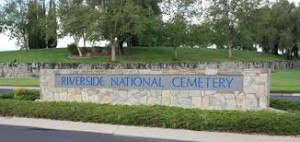
downloadGoodman was interned on April 21, 2006 at the Riverside National Cemetery.  He qualified for resting there by his service in World War 2.

Car Collides With Giant Books

Car Loses Battle With Giant Books at North Hollywood Bookshop

Just Another Zany Day in L.A.

The Crash Scene

The Crash Scene

This is probably a first:  An auto, T-Boned at the intersection of Cauhenga Blvd. and Chandler in North Hollywood, was sent spinning and crashing into the front of The Illiad Bookshop’s outside wall, which featured 10 foot replicas of antiquarian books.  The books, made of wood, plaster, paint, and lord knows what else, took a beating, but the car was the clear loser.  One wag wondered if this was a re-enactment of some bygone Ralph Nader safety test.  This is Los Angeles, so anything is possible, although the fact that real people were in the vehicles instead of crash dummies, would seem to be a little reckless for a test crash.

IMG_1706The giant books that adorn the sides of the bookshop are so realistic that one of the old timers watching the activity from his sidewalk perch commented that the front of the shop reminded him of the sets on the movie Intolerance.  The shop remained open during all the commotion, customers crunching their way through small bits of plastic debris and stepping over pieces of fiberglass fenders to get up the small steps to the front door.  The two kittens who prowl around the shelves all day were sound asleep in their baskets at the front counter, the events not even worth a kitty yawn.  It was business as usual inside, boxes of books brought in, sales being made, customers asking for specific books.  Nothing seemed disturbed inside.  Maybe the giant books are actually Magical Totems, warding off any real harm to the inside of the shop, fiercely guarding the grounds against any monster machine intruders.

To see the short video on youtube.com,  click here:

Paperback Show Memories

The Paperback Collector’s Show has been around for a long time. This year will be the 34th Annual event, on April 7, 2013 in Mission Hills (see link below). We dug into the memory box and pulled up a few pix of some of the characters seen at this great Los Angeles show, as far as known the first such show in the world to feature the paperback book.

The Founder of the show is Tom Lesser, a great book collector and showman, who always puts on a first class event.  He somehow manages to get all the great authors to attend and sign books and mingle with fans.  I would love for someone to write up a history of the show itself, from its humble beginnings in a little kiosk on the now gone grassy mall in Burbank to the Mission Hills site it now occupies.  What great authors have been there to meet their fans!  Many of them now gone to the big publisher in the sky.  The avid collectors and vendors rounded out an intense experience for anyone. Here’s a link to the show site, Los Angeles Vintage Paperback Collectors Show. Click on the menu bar “Memories of Bookshops and Booksellers” for more on Tom.

Here’s our first photo, Tom and Sheri Lesser:


Is This The End for Cliff’s Books?

Rumors are swirling – Is This The End?

Is this the end for Cliff’s Books in Pasadena, California?  Cliff’s has been around for about 24 years, but Cliff is about 80 years old, and the scuttlebutt is that the rent just jumped up 40% to a huge amount.  Owner Cliff Gildart hasn’t been in the store reportedly for over 2 years, hiding out somewhere in a little cottage in the wilds of the Pasadena foothills.  The shop has been run by a skeleton crew, trying to cope with the recession-depression, an old building full of problems, an absence of foot traffic on the street, the decline of brick-and-mortar stores, the rise of internet bookselling, the Nook, the Kindle, the lack of money to make any big book buys, the vanishing collectors, the cultural meltdown, the decline of reading, the horrible educational system in Los Angeles where 50% of the students in high schools supposedly drop out (Pasadena itself has a much better school system than L.A.), the high price of gasoline, and possibly a decline of interest in the book itself, replaced by an electronic device.

Cliff’s is one of the last of the big used bookstores in Southern California.  We have already said good-bye to most of the giants: Book City Hollywood, Berkeleuw (Hollywood), Book City Valley, Book Castle (Burbank), Book City (Burbank), Book Baron (Anaheim), Acres of Books (Long Beach), Wahrenbrocks (San Diego), Pickwick (Hollywood), and others we can’t recall at this time, much less the scores and scores of small and medium sized shops that are gone with the wind.  What’s left in the World of Giants if Cliff’s goes out?  The only one we can think of is Brand Bookshop in Glendale.  That’s it for large general used bookstores in Southern California. A big store has opened in Downtown LA, but this writer hasn’t checked it out yet. It does have a fitting name: The Last Bookstore.

With a population of nearly 10 million in Los Angeles County alone, we will be left with one large general shop.  And that one is shaky because the owner, Jerome Joseph, a great bookman and a funny, cheerful fellow, is himself well into his 80’s.  So what is the problem?  Is the population of Los Angeles just getting stupid?  Brain-dead from TV?  Overloaded with immigrants who refuse to learn English? There are certainly some big hurdles for any retailer, especially book shops.  Real estate prices have soared, rents have skyrocketed.  There’s a recession, but tons of empty buildings and storefronts have not stopped the onslaught of high rents.  The greed seems never ending, even to the point of self destruction.  Down the street from Cliff’s used to be a newstand-paperback joint called Bungalow News.  The rent went up so high that the long-time proprietor had to call it quits.  The storefront has been vacant for many years.  Across the street from Cliff’s was a shop called Book Alley.  This outfit started about 20 years ago in Old Town Pasadena, as a little shop in an Alley in the Old Town maze.  High rent drove them out to settle in on East Colorado, almost across from Cliff’s.  Eventually the rents bloated up and out, so Book Alley, under a new owner, moved farther east, to its new high rent spot 9 blocks or so east of Cliff’s.  That storefront across from Cliff’s has also been empty for years.  The landlords must be so wealthy that empty stores for years has absolutely no effect on their bank accounts or lifestyles.  Some cities across the country have started to tax landlords who keep their buildings empty.  Will that happen in Pasadena, where empty storefronts abound?  Construction of new buildings is still brisk, the old one-story buildings wrecked and 4 and 5 story monsters now are lining East Colorado, with more to come.  Billions spent in construction costs.  The developers and banks have seemingly unlimited funds to spend, but where’s the retailers?  A lot of the stores remain empty.  As long as the U.S. Treasury is printing money, (now over 40 billion every month), the banks and developers will have a field day. Some say that at some point in the future, when the interest on the debt reaches the edge of the solar system, the big collapse will come, sucking the entire civilization into the void. By that time the population may be too ignorant and stupid to even notice.

Stay tuned here for the latest news on this drama and the heartbreak story of Cliff’s Books.